Sep 8, 2026
30% more Google Ads conversions tracked for Atelier Printworks | Know Analytics
Written by
Daria Rubanka, Tommy Packham
Published Oct 15, 2026 comments
Key takeaways
- Atelier Printworks, an Edinburgh-based DTC wall art brand, faced conversion tracking and attribution gaps across Google Ads, Meta, and GA4 due to browser restrictions, ad blockers, cookie limitations, and unreliable Shopify tracking integrations.
- Know Analytics replaced the existing Shopify app-based tracking setup with a custom server-side GTM implementation hosted on Stape.
- The server-side implementation reported nearly 30% more Google Ads conversions than the original Shopify integration. Within approximately 90 days, Google Ads reported 30% lower CPA and 30% higher ROAS.
- GA4 purchase event coverage increased from 70% to 90–91%, while transactions attributed to Direct decreased from 38.67% to 16.31%.
- Meta Purchase Event Match Quality increased from 6.5 to 9.3, while additional conversions attributed through CAPI increased from 45.5% to 100%.
Know Analytics is a specialist marketing analytics consultancy helping businesses and agencies build reliable, compliant measurement systems. One of their clients, Atelier Printworks, is an Edinburgh-based direct-to-consumer (DTC) wall art brand specializing in long, narrow framed artwork for awkward spaces. Paid advertising drives a significant share of its revenue, so budget decisions depend heavily on the data reported by advertising platforms.
However, the client's advertising dashboards did not match its actual sales. Between iOS restrictions, ad blockers, and consent limitations, a significant share of purchases was not being attributed to the ads that generated them. Meta, Google Ads, and Shopify were reporting inconsistent conversion figures. Atelier Printworks needed a measurement setup it could trust before scaling its advertising spend.
Challenge: recovering lost conversion data and attribution
Atelier Printworks relied primarily on Shopify apps for marketing and analytics measurement:
- Google & YouTube app for GA4 and Google Ads tracking.
- Simprosys for Meta Pixel and Conversions API tracking.
Although these plug-and-play integrations were quick to deploy, they offered limited control over tracking quality and attribution. In this case, there were several clear data-quality issues, and the Google Ads conversion tracking was not working at all.
GA4 and Shopify Analytics were showing attribution issues
Before implementing server-side tracking, Know Analytics identified several problems across GA4 and Shopify Analytics:
- 1.Almost 40% of transactions were attributed to Direct. This was unusually high compared with the client's repeat customer rate, suggesting that a significant amount of marketing attribution was being lost.
- 2.Around 3% of transactions had
(not set)as the session source/medium. Although not a critical issue, this was still higher than Know Analytics would expect from a well-configured eCommerce tracking setup. Know Analytics aimed to reduce this figure to below 1%. - 3.GA4 was recording duplicate transactions. This was inflating eCommerce reporting and reducing confidence in GA4 revenue and transaction data.
- 4.GA4 was limited to Basic Consent Mode. Because of the limitations of the Shopify Google & YouTube integration, the setup was not taking advantage of Advanced Consent Mode. This meant GA4 received no measurement data from users who did not grant analytics consent, increasing overall data loss and removing the opportunity to benefit from Google's consent-based modeling.
Google Ads conversion tracking was not working
The client's native Google Ads conversion tracking had stopped working, so they were relying on GA4-imported conversions instead.
The client also used a custom product-feed solution for Google Merchant Center that did not rely on Shopify's standard product IDs or SKUs. This created a mismatch between the product identifiers being sent with conversion data and those contained within the Merchant Center feed.
Even if the native Google Ads tracking had been functioning correctly, this product-ID mismatch would still have limited the quality of eCommerce conversion and product-level reporting.
Meta CAPI was underperforming
Meta tracking was functioning, including Conversions API, but the quality of the data being sent was relatively poor.
The Purchase event had an Event Match Quality (EMQ) score of 6.5/10, and Meta was reporting only around a 45% uplift in additional attributed conversions from CAPI.
Browser and device restrictions
The client's audience was heavily exposed to browser and device-level tracking restrictions. An analysis of its GA4 data showed that:
- Around 70% of users browsed on iPhones.
- Only 33,55% of users browsed with Chrome.
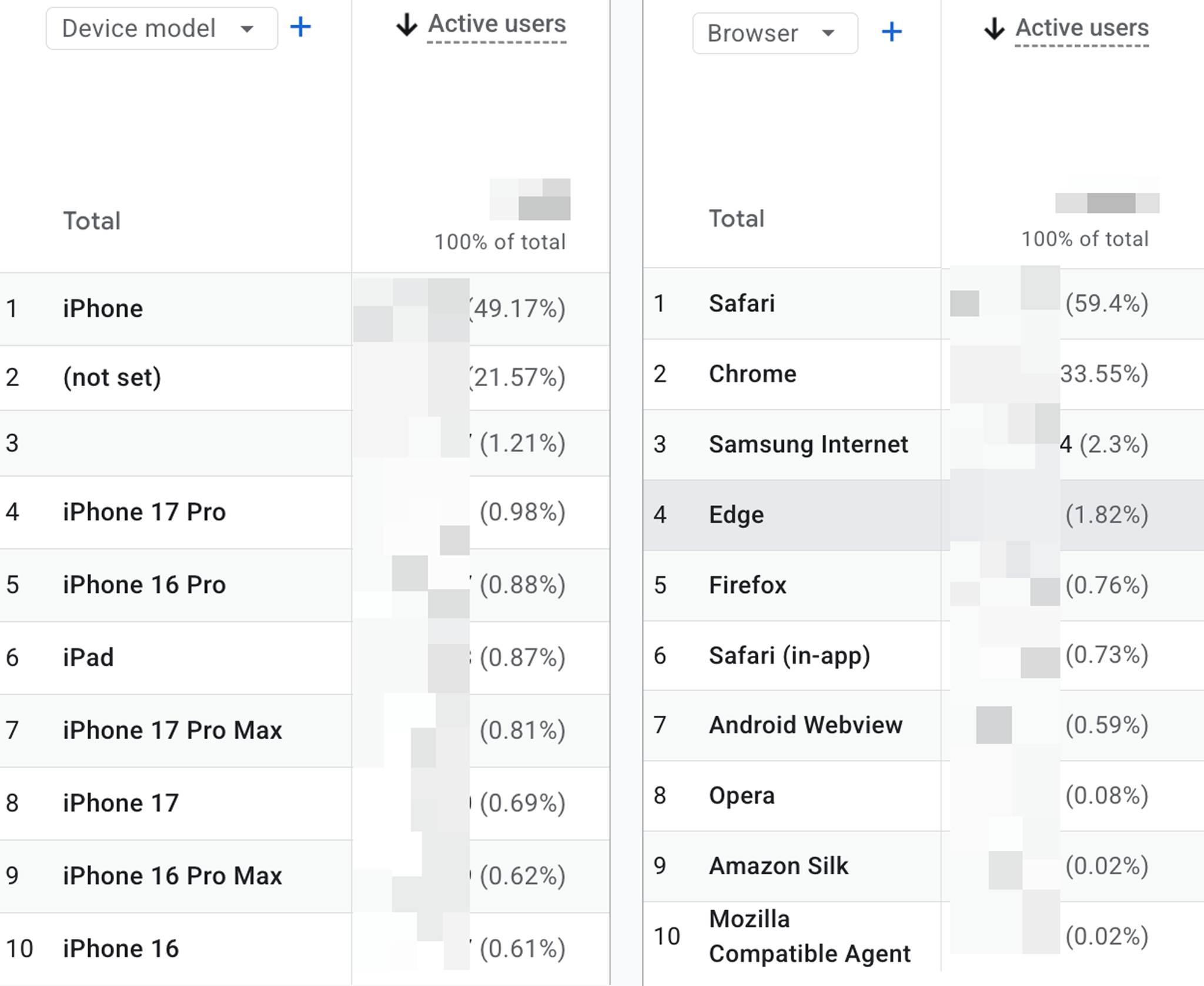
This meant a large proportion of the client's traffic came from environments such as Safari and iOS, where technologies such as Intelligent Tracking Prevention (ITP), cookie restrictions, and other privacy controls can reduce the lifespan and availability of marketing identifiers.
Given the identified data-quality issues and the client's five-figure monthly advertising spend, continuing to rely on plug-and-play tracking integrations was no longer sufficient.
Solution: custom server-side GTM with Stape
Know Analytics aimed to:
- Increase Purchase Event Match Quality to 8+.
- Improve browser/server event matching and deduplication.
- Send more reliable customer and event identifiers.
- Recover more attributable conversions through the server-side implementation.
Rather than rebuilding the existing client-side GTM setup, Know Analytics decided to implement a custom server-side tracking architecture with Stape. This provided greater control over first-party data collection, marketing identifiers, and the overall reliability of conversion tracking.
For Shopify projects, much of the eCommerce logic, testing, and dataLayer work required for a custom client-side GTM implementation is also needed for server-side tracking. Extending that setup to server-side GTM therefore requires relatively little additional effort compared with the potential data-quality benefits.
The client also used Klaviyo for email marketing and planned to test additional advertising platforms, including ChatGPT, Pinterest, and Microsoft Ads. With more channels being added, the need for reliable first-party tracking and consistent attribution was only going to increase. At that point, moving to server-side tracking became the obvious long-term choice rather than continuing to layer additional client-side integrations onto Shopify.
The implementation combined several Stape features:
- Additional utilities designed specifically to improve tracking resilience and data quality
Know Analytics also used its own custom GTM templates and implementation framework, built and modified from templates available in Stape's GTM Template Gallery.
Implementation and maintenance
Because Atelier Printworks was running on Shopify, the initial implementation was relatively straightforward. The core setup took only a couple of days, including configuration, testing, and a short period of post-launch monitoring.
As with any custom tracking implementation, some ongoing maintenance is expected. Websites change over time – themes are updated, checkout flows evolve, apps are added, and developers modify front-end functionality. Any of these changes can affect tracking logic and occasionally require adjustments.
In practice, Know Analytics typically revisits the setup every few months to:
- Check that key events and eCommerce tracking are still firing correctly;
- Fix anything affected by website or Shopify changes;
- Review data quality and attribution;
- Apply relevant tracking enhancements.
Stape's regularly updated tag templates, Power-Ups, and server-side features also provide opportunities to improve the setup over time.
Results: nearly 30% more Google Ads conversions and improved attribution
The new server-side tracking implementation produced measurable improvements across Google Ads, GA4, and Meta.
Google Ads
To evaluate the impact, Know Analytics first restored the client's native Google Ads conversion tracking, which had previously stopped working. The agency then compared three Google Ads Purchase conversion tracking setups side by side: Shopify's Google & YouTube app, a custom client-side GTM setup, and server-side GTM with Stape.
The comparison showed that:
- Server-side GTM reported 5.6% more conversions than the equivalent client-side GTM setup.
- The client-side GTM implementation itself reported almost 23% more conversions than Shopify's default Google & YouTube app setup.
- Combined, the full server-side implementation reported nearly 30% more Google Ads conversions than the original Shopify setup.
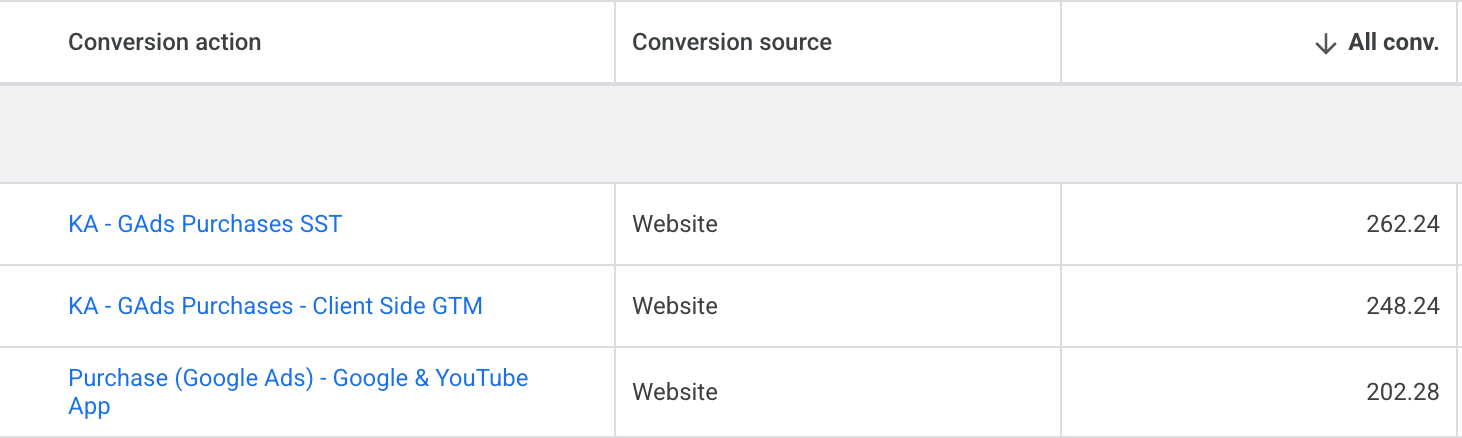
The comparison likely understated some of the broader benefits of Stape. The client-side GTM test was already operating in an environment using Custom Loader, Cookie Keeper, and Click ID Restorer, meaning it also benefited from improvements in preserving identifiers and recovering attribution.
Know Analytics estimated that the total measurement uplift compared with an untouched Shopify implementation could be approximately 35–40%. However, this was not established through a controlled test, so the directly observed improvement remains nearly 30%.
Within approximately 90 days of the implementation going live, Google Ads also reported:
- ~30% lower CPA
- ~30% higher ROAS
Part of this improvement came from Google Ads being able to observe and attribute conversions that had previously been missed. More complete conversion data also provided stronger signals for its bidding algorithms.
Importantly, this does not mean server-side tracking generated 30% more sales. It allowed Google Ads to see and attribute substantially more of the conversions that were already happening, while providing its bidding system with better-quality conversion signals.
Based on the client's advertising spend, the value recovered through Google Ads alone meant that the implementation and ongoing Stape costs effectively paid for themselves within the first few months.
Another issue was that GA4 and advertising platforms, particularly Google Ads, were not receiving new-versus-returning customer purchase data or customer lifetime value information. Stape's Shopify app and dataLayer made it easier to send this data, allowing the client's advertising agency to prioritize new customer acquisition and support the business's overall growth.
Profit tracking has not yet been implemented, but the client is considering adding it after seeing the benefits of the current setup. However, since profit margins are relatively consistent across products, its additional impact is expected to be limited.
GA4
Before the implementation, GA4 was recording only approximately 70% of Shopify's online orders, meaning around 30% of transaction data was missing. Know Analytics measured purchase event coverage as the number of transactions recorded in GA4 divided by the number of Shopify online orders.
Following the new setup, GA4 was recording approximately 90–91% of Shopify online orders. That reduced the measurement gap from around 30% to just 9–10%.
Two major changes drove the improvement:
- First, the Shopify Google & YouTube implementation was limited to Basic Consent Mode. Moving to a custom implementation made it possible to enable Advanced Consent Mode, meaning GA4 could benefit from Google's consent-based measurement and modeling capabilities. This improvement is not inherently server-side – a properly configured custom client-side GTM implementation could also use Advanced Consent Mode.
- The second improvement was more specific to the server-side architecture: reducing the amount of measurement loss associated with browser tracking prevention, ad blockers, and restrictions on client-side identifiers.
Some measurement loss remains unavoidable because users can decline consent and certain browser restrictions cannot or should not be bypassed. However, moving from 70% to more than 90% transaction coverage represented a major improvement in the amount of eCommerce data available for analysis.
The current setup uses a custom first-party subdomain, but Know Analytics estimates that moving to a same-origin setup could further increase GA4 purchase event coverage to 95–97%.
Direct attribution in GA4
Before the custom server-side implementation, both GA4 and Shopify Analytics were attributing an unusually high proportion of transactions to Direct.
Direct transactions represented approximately 40% of total revenue, which did not align with the client's acquisition strategy or customer behavior and suggested that marketing attribution was being lost.
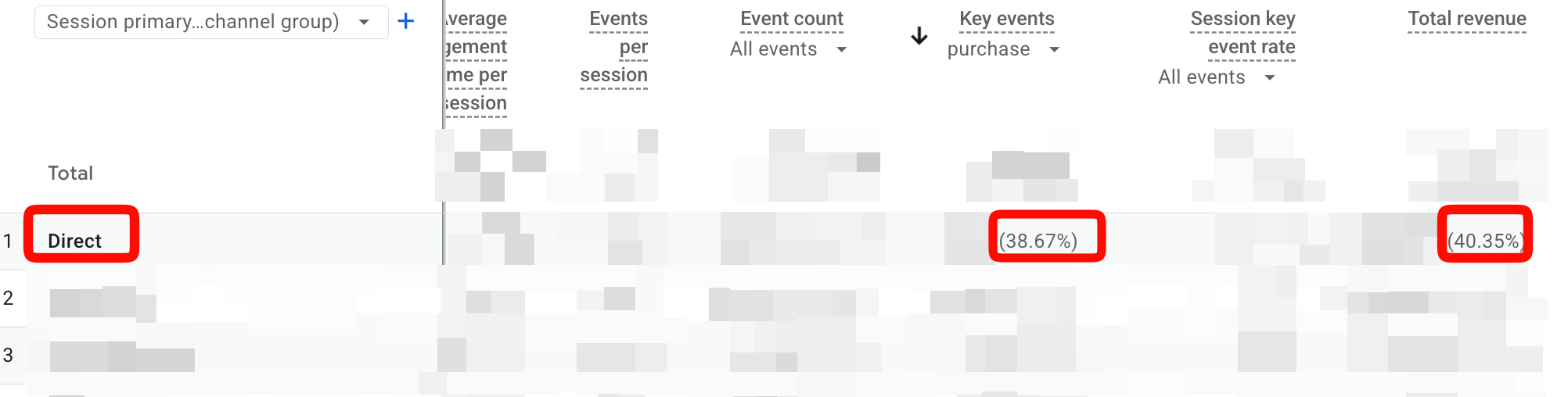
After implementation, GA4's channel attribution became significantly healthier.
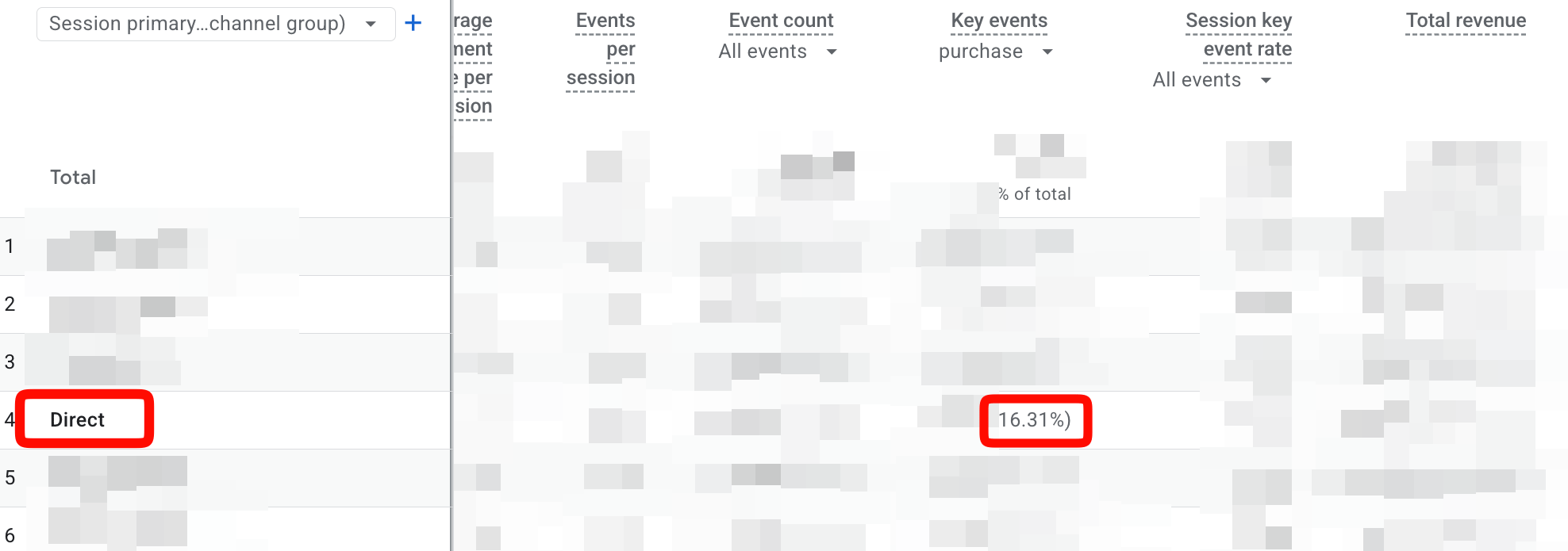
| Shopify Analytics Avg. | GA4 before server-side tracking | GA4 after server-side tracking | |
| Direct Transactions as % of totalSession (last non-direct click) model | 64.68% | 38.67% | 16.31% |
The results strongly suggest that the previous setup was being constrained by a combination of browser tracking prevention, shortened cookie lifetimes, and attribution limitations within Shopify's plug-and-play tracking integrations.
This was particularly relevant given the client's audience profile, with a high proportion of users on iPhone and non-Chrome browsers.
Meta Ads
Meta tracking also showed significant improvements. Before the custom server-side implementation, the client was using the Simprosys Shopify app to manage Meta Pixel and Conversions API tracking. Although CAPI was active, the quality of the data being passed back to Meta left considerable room for improvement.
The first clear indication of this was Meta's Event Match Quality score, which increased substantially after the new implementation.
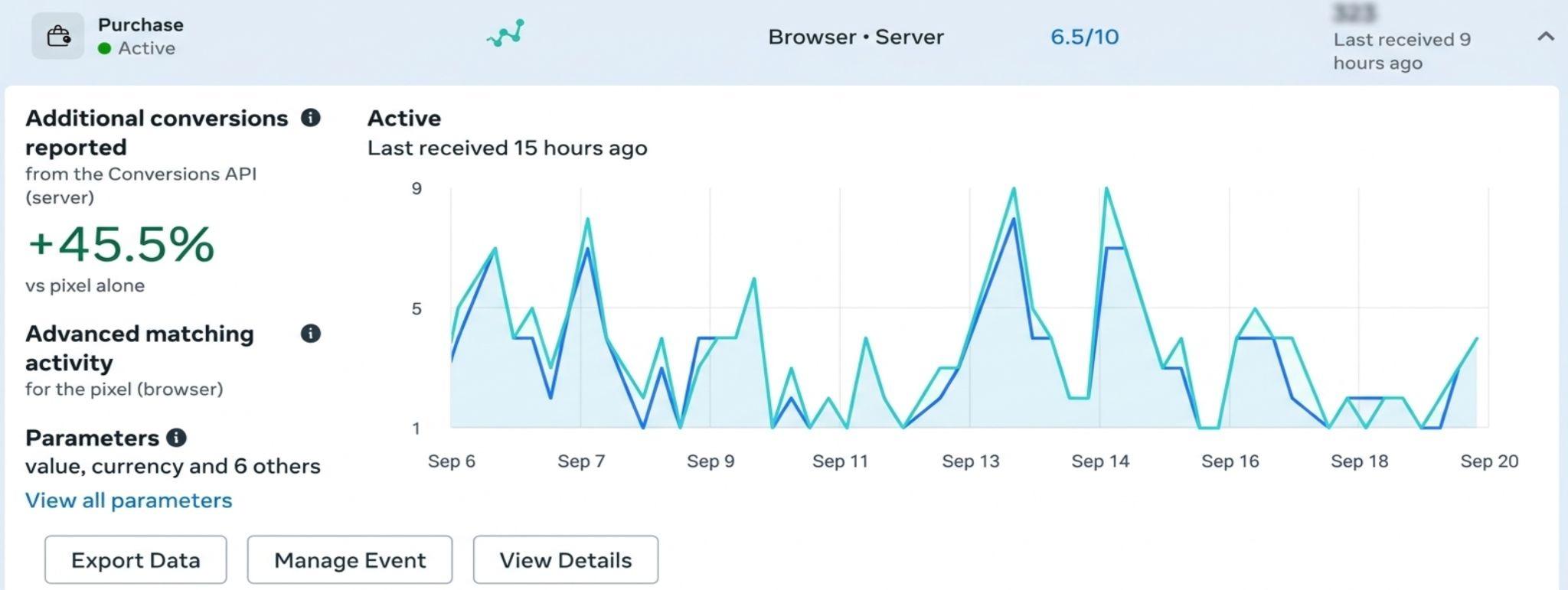
After switching to a custom server-side GTM setup hosted on Stape:
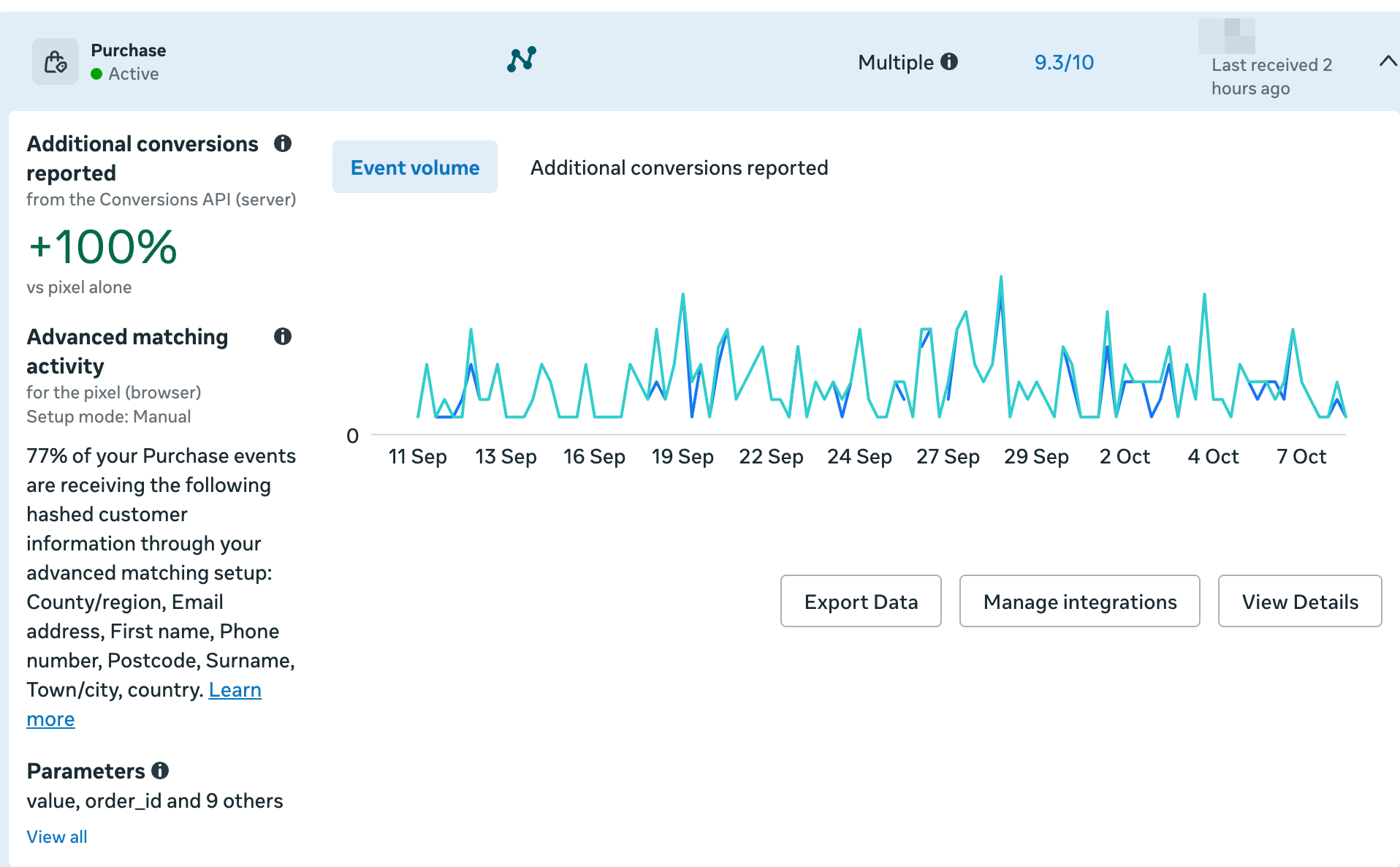
The Event Match Quality score increased from approximately 6.5 to 9.3, while additional conversions reported through CAPI reached 100% compared with Pixel alone, up from 45.5% before the implementation. More recent reports have shown an uplift of up to 150%.
We sell on Shopify to customers in many countries and rely on Meta and Google Ads, so accurate conversion data matters to us. Before the move, browser-side tracking was missing purchases and our ad platforms were optimizing on incomplete information. Know Analytics handled the setup from start to finish, explained each step clearly, and got it running without disrupting the store. We now have much more confidence in the numbers we use to make spending decisions.
John Duncan
Atelier Printworks co-founder
Why Know Analytics chooses Stape
Know Analytics has implemented Stape across a growing number of client and agency-partner accounts and considers it its preferred server-side solution for new eCommerce tracking projects for several reasons:
- Compared with building and maintaining a fully custom server-side infrastructure in Google Cloud, Stape was significantly more cost-effective – approximately 3–4x cheaper for this client – while also being faster to deploy. This reduced both ongoing infrastructure costs and the time required for implementation.
- Another advantage is the range of features available for improving tracking reliability. Cookie Keeper, Click ID Restorer, Custom Loader, and first-party server-side tagging provide functionality that would otherwise require additional custom development.
- Although Stape is a more technical platform and requires careful configuration to get the best results, Know Analytics has consistently found the resulting tracking quality to be stronger than simpler server-side hosting alternatives.
- For clients already investing heavily in paid media, the combination of lower infrastructure cost, faster deployment, and stronger tracking resilience makes Stape a particularly compelling option.
For us, the principle is simple: more technical does not automatically mean better — but when the additional technical capability is implemented properly, it gives us more control and better results.
Know Analytics
Want to start on the server side?
Try for freeWas this article helpful?
Recommended for you
Jul 27, 2026
Blog
A guide on how to set up Google Ads conversion tracking in 2026
A step-by-step guide to conversion tracking Google Ads setup: configure the conversion tag in GTM, plus fixes for firing, duplication, and reporting issues.
Sep 28, 2026

Comments