Jul 22, 2026
74% less developer involvement in tracking | TRKKN
Written by
Jannik Lichte
Published Jul 27, 2026 comments
Key takeaways
- TRKKN, a leading Google Marketing Platform Sales Partner, Google Cloud Premier Partner, and full-service technology provider, worked with a client that had 118 GTM tags while tracking updates were heavily dependent on developers. At the same time, ad platforms were receiving incomplete conversion data due to ad blockers and browser restrictions.
- The main challenge was that the existing setup couldn't keep up with the pace of growth across new markets and new landing pages.
- To solve this, TRKKN deployed Enhanced Tagging, their own GTM solution that standardized event collection across the website.
- Stape provided the server-side GTM infrastructure, routing events to Google Analytics, Google Ads, and LinkedIn.
- As a result, the number of GTM tags was reduced by 61%, developer involvement in analytics tasks fell by 74%, and the full setup was live in less than a month.
The client is a B2B technology manufacturer operating across multiple markets. The business sells complex technical products to procurement teams and technical buyers. The long sales cycle spans multiple touchpoints across product pages, datasheets, demo request forms, and video content.
To drive the pipeline, the client relies on Google Ads, LinkedIn, and content marketing campaigns across several markets simultaneously. As the business scaled into new regions and started launching new landing pages, tracking requirements grew faster than the existing setup could support.
To address this, the client partnered with TRKKN, a full-service technology partner with deep expertise in (s)GTM deployment and scalable tracking solutions.
Challenge: complex setup and data loss across channels
A client had built a custom library of 118 GTM tags to track different types of user interactions across the website. However, every new tracking requirement required developer involvement. Over time, this made the setup increasingly complex and difficult to maintain. On top of that, dynamic content and Shadow DOM elements remained untracked because building triggers for them required specialized knowledge.
Additionally, data quality was affected by browser-side limitations. Safari's ITP was cutting cookie lifetime windows short, which is a problem in a long B2B sales cycle, where potential clients often return to the site days or weeks after first contact. Ad blockers were intercepting browser-side requests before they reached Google Ads or LinkedIn.
Solution: TRKKN Enhanced Tagging for standardized collection & Stape for server-side data delivery
The existing tracking approach couldn't support the manufacturer's growing tracking needs. To address this, TRKKN built a two-layer tracking architecture.
Data collection with TRKKN Enhanced Tagging
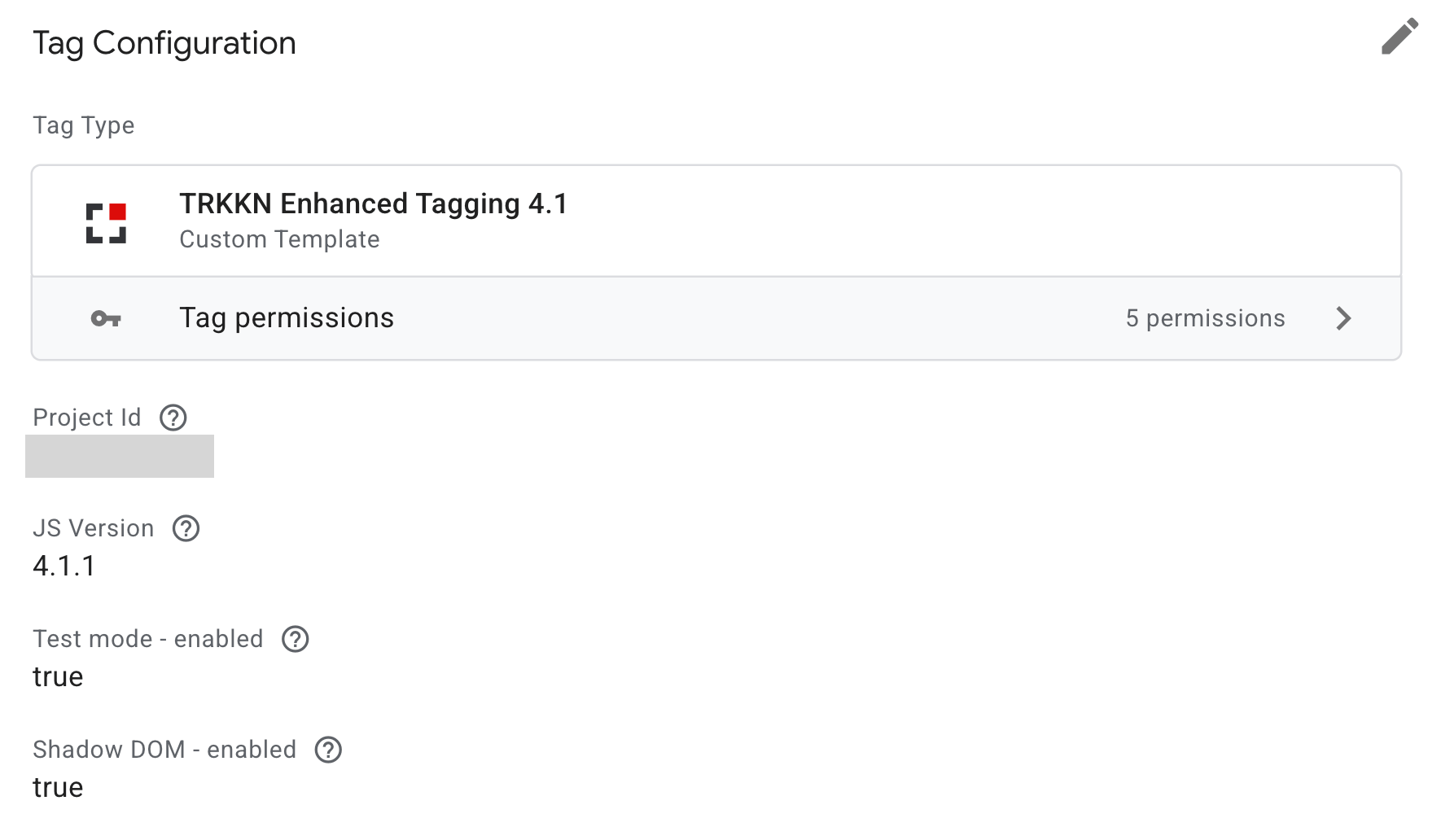
TRKKN introduced its "One Tag Rules All" approach, replacing the client's 118-tag library with Enhanced Tagging, a GTM solution that standardizes user interaction tracking without requiring custom code.
TRKKN Enhanced Tagging captures user interactions, such as forms, downloads, video engagement, outbound clicks, scroll depth, AJAX interactions, and dynamically loaded content, including Shadow DOM elements.
All interactions are pushed to the central dataLayer in a consistent structure. This means the same event, on any page, in any market, is captured identically. Non-standard interactions are handled through custom click tagging configured within Enhanced Tagging, while new landing pages and microsites are covered from day one without additional setup.
Routing events with Stape's server-side GTM
Events captured by Enhanced Tagging and pushed to the dataLayer are forwarded from the web container to Stape's server container using Stape's Data Tag and Data Client. From there, Stape routes the events to Google Analytics, Google Ads, and LinkedIn server-side.
This removed the browser as the point of failure:
- Ad blockers couldn't intercept outgoing requests;
- Cookie lifetime extended beyond ITP restrictions;
- Consent mode operates correctly at the server level, reducing unnecessary data loss.
The entire setup was completed in less than a month and covered ~95% of tracking needs out of the box without custom code.
Enhanced Tagging standardized data collection across the site, while Stape's server-side GTM infrastructure ensured reliable event delivery to analytics and advertising platforms. Together, the two layers created an end-to-end no-code tracking setup easy to maintain and resilient to browser-side data loss.
Results: 61% fewer GTM tags and improved data reliability
The impact was visible on both sides of the setup.
On the collection side, replacing 118 tags with TRKKN Enhanced Tagging delivered several improvements:
- Reduced the number of GTM tags by 61%.
- Cut developer involvement in analytics tasks by 74%.
- Enabled new landing pages and markets to be covered through the same standardized tracking setup.
- Allowed the marketing team to handle routine tracking updates without developer involvement.
On the delivery side, routing events through Stape's server-side GTM improved how tracking data reached advertising and analytics platforms. By reducing the impact of browser-side limitations, Google Ads, LinkedIn, and Google Analytics received more complete signals for measurement and attribution.
Why choose Stape
By adding Stape's server GTM hosting to your tracking setup, you can:
- Route events server-side to bypass ad blockers and browser restrictions that silently cut into your conversion data.
- Extend cookie lifetime and preserve attribution across longer B2B sales cycles where prospects return days or weeks after the first visit.
- Scale tracking across new markets and landing pages without creating an overcomplicated setup, and with built-in power-ups that improve tracking quality even more.
For more information or questions about TRKKN’s (s)GTM consulting services and Enhanced Tagging solution, visit the company’s website.
Want to start on the server side?
Try for freeWas this article helpful?
Recommended for you
Jul 2, 2026
Blog
Form tracking in 2026: why your numbers never match your CRM (and how to fix it)
Client-side form tracking breaks more than it works. Here's why your GA4 and CRM never match – and how server-side GTM fixes it for good.
Jun 11, 2026

Comments