Apr 28, 2025
Lupe: clean first-party tracking for businesses, hosted on Stape | TDS
Written by
Evelyn Whiteley, Mark Kovic
Published Nov 2, 2026 comments
Key takeaways
- Lupe is a platform built by Transparent Digital Services (TDS) on Stape’s server-side infrastructure. It sets up and maintains first-party data infrastructure, including server-side tracking.
- This case study looks at how Lupe performs, using two client examples.
- Skincare brand: double-counted events and missed purchases. After moving to a Stape server container, GA4 purchases rose from 1,724 to 4,512, and Google Ads cost per purchase fell 39%.
- Multi-domain Shopify store: UTMs and click IDs were lost between domains. After moving to server-side GTM with a single GA4 property, parameters persist through checkout and paid media attribution has stabilized.
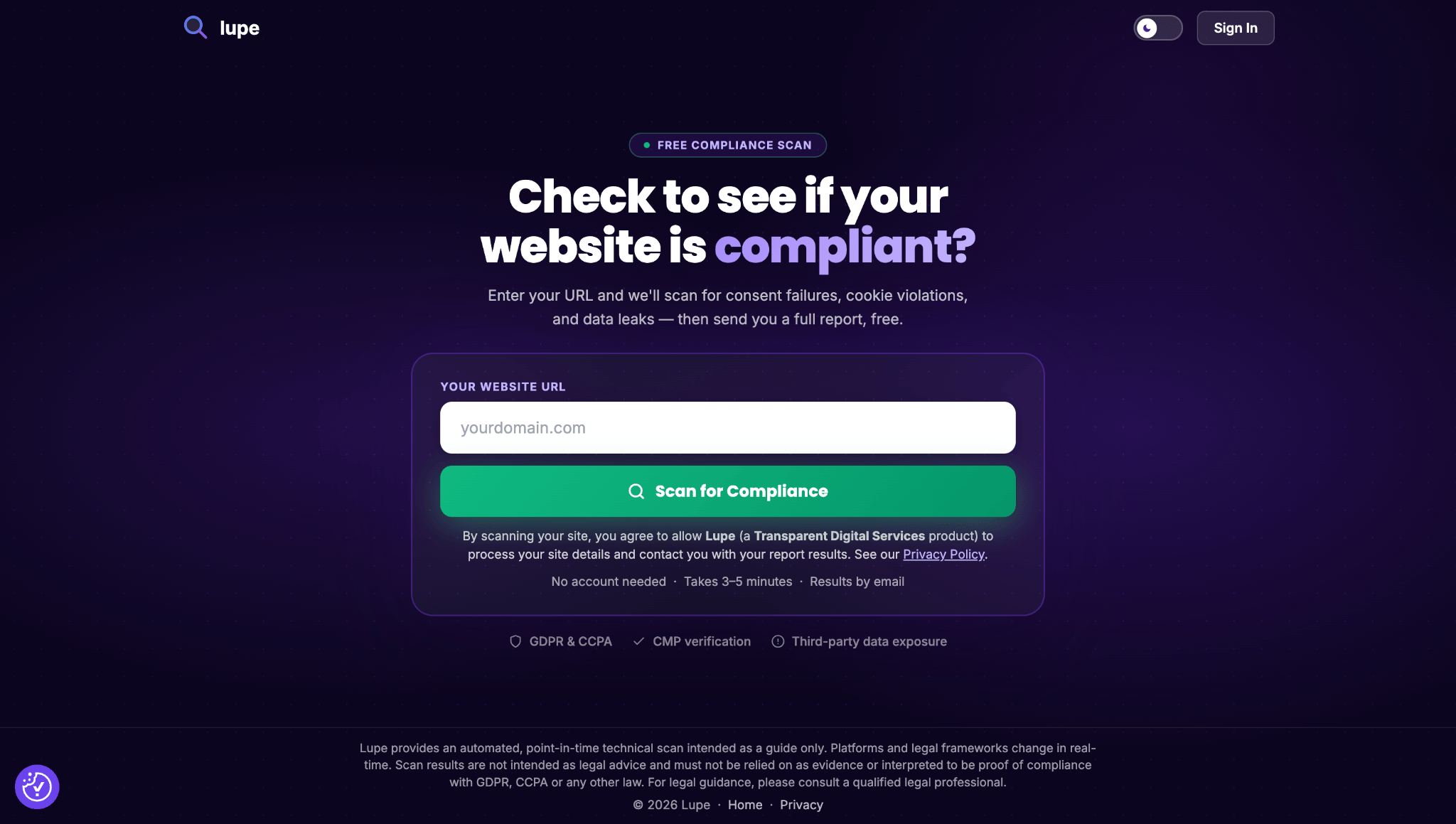
Lupe is a platform that sets up and maintains first-party data infrastructure, including server-side tracking, for growing businesses. It keeps marketing systems running efficiently, maintains compliance as privacy laws change, and keeps tracking in step with changes to marketing and analytics platforms.
Lupe was built by Transparent Digital Services (TDS), a UK agency and Stape partner that audits, fixes and runs tracking and advertising for e-commerce, subscription and service businesses. After years of fixing the same problems for client after client, TDS built Lupe to handle that work, with each client’s setup hosted on a Stape server container. This article covers two TDS clients, a skincare brand and a multi-domain Shopify store, whose tracking was cleaned up and moved server-side.
Challenge: tracking can be a full-time job
When TDS reviews a new client’s tracking setup, they find significant issues in around 95% of cases. These problems often go unnoticed because the tracking appears to be working until the setup is examined in more detail.
The problem is rarely a single issue. More often than not, several problems have built up over time: two platforms recording the same purchase, parameters disappearing between the cart and checkout, or tags firing when they shouldn’t. These issues can be easy to miss, but together they make it harder to understand what is really driving sales and can lead marketing platforms to optimize based on incomplete or inaccurate signals.
The setup is messy
Years of plugins, Shopify apps, agency hand-overs and copy-pasted pixels pile up. The same purchase is reported twice because a Google app and a Meta app both fire it. Scripts conflict and block each other. UTMs and click IDs get dropped when a customer moves from the main site to the shop, so paid sales show up as Direct or Organic.
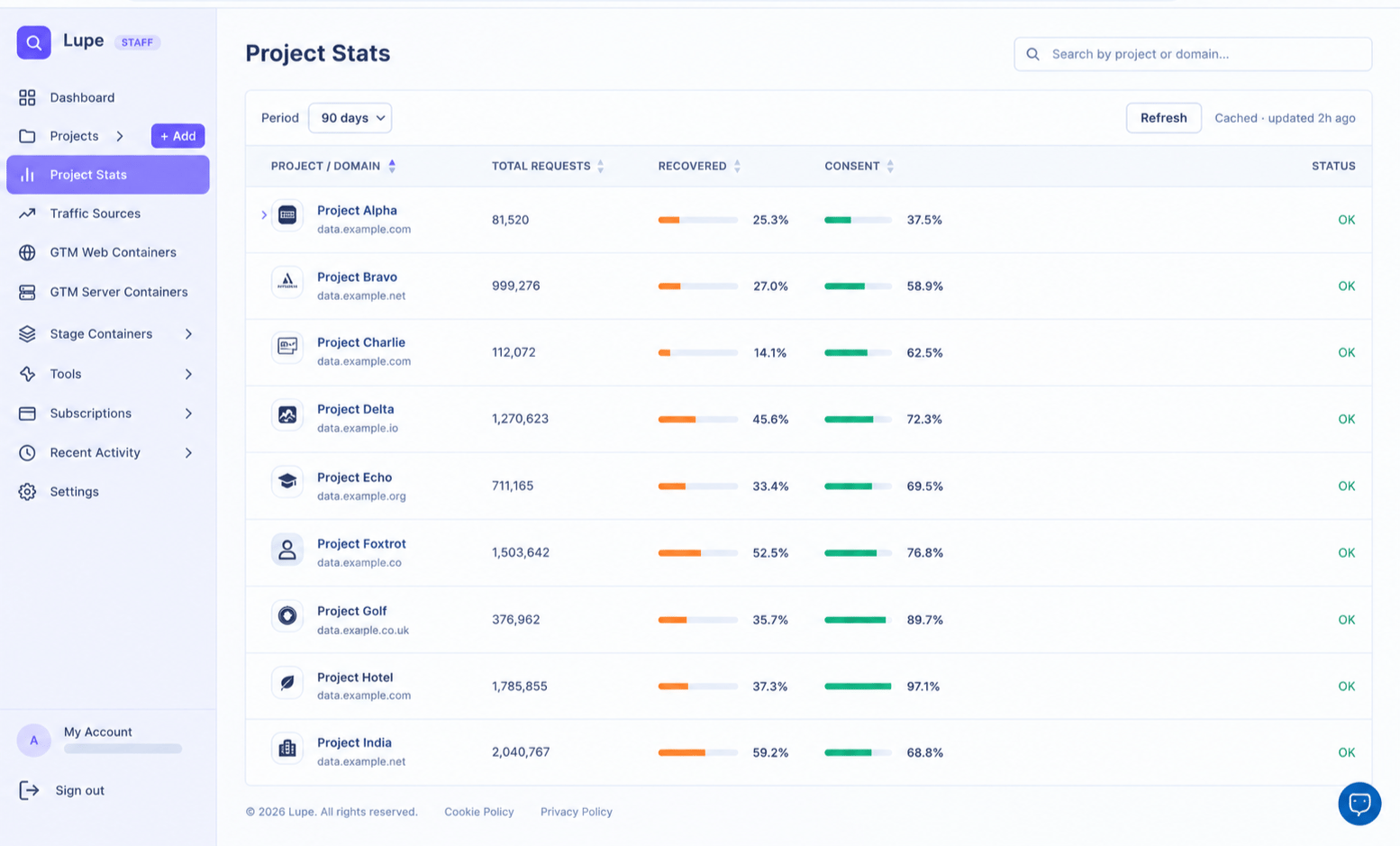
This is commonplace right now, and one of the most vital elements of Lupe, is the ability to simplify, organise and maintain these platforms and systems in one easy-to-use dashboard. This is becoming more and more integral to business success as Google's and Meta's bidding systems, and the growing list of AI tools businesses rely on, optimise towards the signals they receive. Feed them duplicated, incomplete or unconsented events and they confidently optimise in the wrong direction.
Getting it right takes real expertise
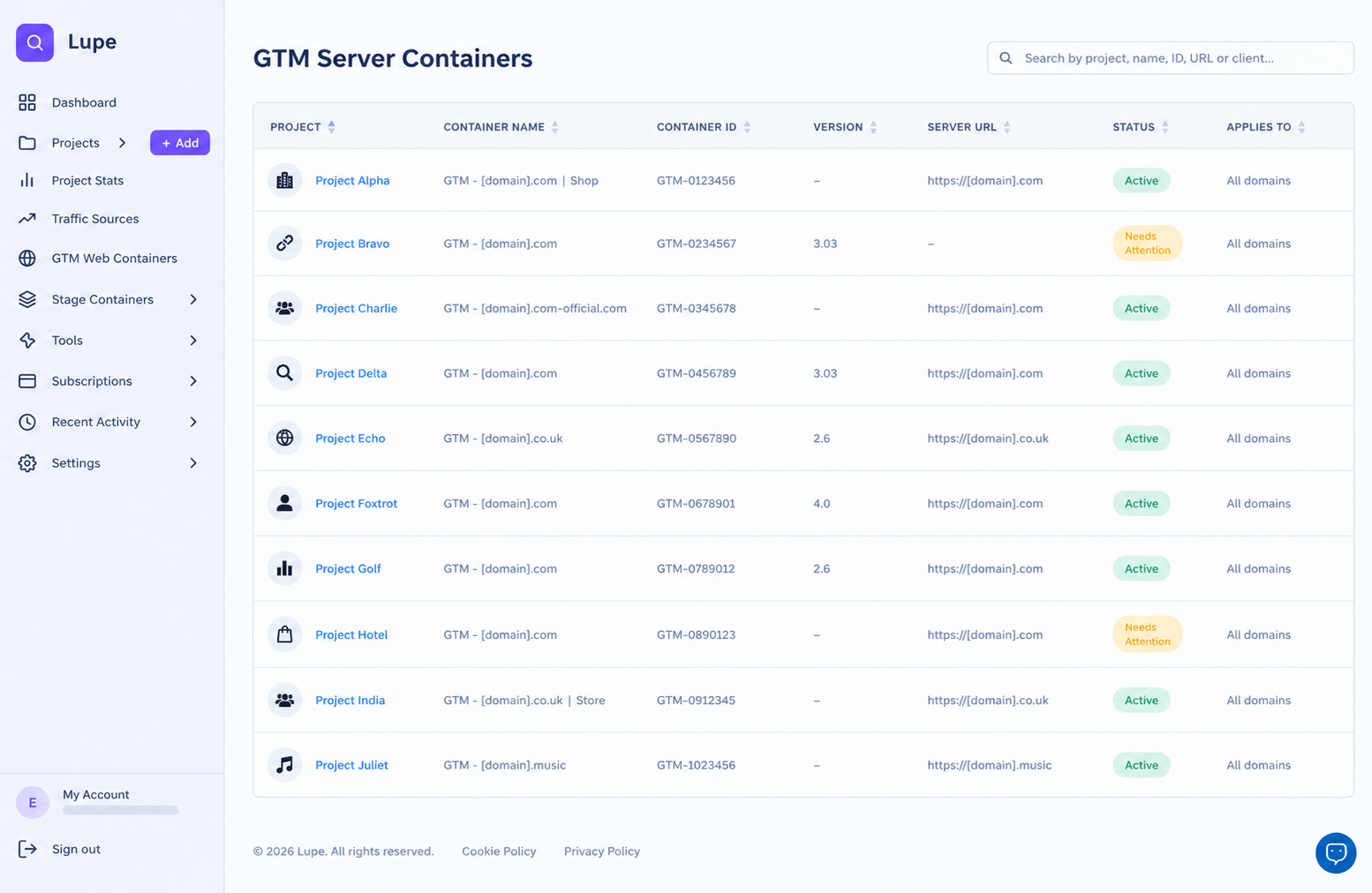
Server-side tagging, consent mode, deduplication and event match quality are specialist work. TDS engineers update and maintain Lupe so that businesses can run a first-party setup that they own and control, hosted on Stape’s server-side infrastructure.
How this showed up for two Lupe clients
- A fast-growing skincare brand on Shopify: The Google and Meta Shopify apps were double-counting events, and client-side tracking was missing purchases.
- A premium multi-domain Shopify store: UTMs and click IDs were dropped when customers moved from the main site to the shop, so paid sales were credited to Direct or Organic.
Solution: server-side tracking on a Stape server container
Lupe addresses these problems by moving tracking to Stape’s infrastructure. Stape hosts the server-side Google Tag Manager (GTM) container, which receives data from the website and sends it from the server to marketing and analytics platforms instead of relying only on browser-based tags.
- Skincare brand: to address the double-counted events and missed purchases, Lupe moved the client to a Stape server container with the Meta Conversions API (CAPI) and Google Ads connected.
- Multi-domain store: to keep UTMs and click IDs intact between the main site and the shop, Lupe moved the client to a server container hosted on Stape and used the Multi Domains power-up to run both domains through one container, with a single GA4 property.
Lupe adds the maintenance layer. TDS engineers keep the setup working across server-side tagging, consent mode, deduplication and event match quality.
Results: cleaner data and lower cost per purchase
Once the setup was server-side, the reported figures became more reliable. Here is what the two clients saw after implementing Lupe.
Skincare brand on Shopify
- Purchases tracked in GA4 rose from 1,724 to 4,512.
- Meta event match quality rose from 0–5 to consistently above 9.
- Google Ads cost per purchase fell 39%, from £19.42 in February to £11.97 in April.
- Meta-reported purchases rose from 611 to 3,807, and cost per purchase fell from £41.44 to £14, roughly two-thirds lower.
The increase in GA4 purchases did not reflect a sudden rise in sales. It showed that the brand had been under-reporting conversions, so its ad platforms had been learning from incomplete data. Once tracking stabilised, the conversion rate passed 10%.
Multi-domain Shopify store
- UTMs and click IDs now persist through checkout, and sessions stay intact.
- Paid media attribution has stabilised.
- The team can separate new from returning customers and see which channels drive new sales.
Why Transparent Digital Services chooses Stape
Accurate, compliant tracking shouldn't depend on a business hiring its own data engineer. Lupe and Stape do the technical work, clean up the mess, and keep marketing systems efficient and compliant as the rules change.
Want to know where your setup stands? Scan your site with Lupe to check your consent and tracking, or get started with a first-party data setup on Stape.
Want to switch to the server side?
Try for freeWas this article helpful?
Recommended for you
Case studies
How Lupe and Stape give music artists ownership of fan data | TDS
Lupe on Stape's server-side GTM gives artists owned first-party tracking: unified GA4 property, regional consent routing, and endpoint health monitoring.
Nov 2, 2026

Comments