Sep 28, 2026
Meta's profit-based campaign optimization: use cases and setup
Written by
Uliana Lesiv
Updated Aug 7, 2026 comments
Meta has added a new way to optimize ad campaign performance, which shares profit data with the platform using the Meta Conversions API. At the moment, the feature is in closed beta.
In this article, we will explain in detail how it works and why Profit on Ad Spend (POAS) is a more precise way to estimate ad performance. Also, we will show how to configure profit-based optimization using Stape's Facebook Conversions API tag for server GTM.
Trends in advertising
The primary trend of the past years is using first-party data from CRMs and implementing AI into advertising workflows for ad optimization. For example, Google introduced the Data Manager API, which allows advertisers to create a Customer Match List in Google Ads (first-party data from CMS or CRM used for Smart Bidding and optimized targeting). This data serves to fuel AI and optimize campaign performance.
Meta Ads optimization also tests the new features that require first-party data and use AI for campaign optimization.
Meta Ads introduces profit-based optimization

Meta is currently testing campaign optimization based on profit margins - a feature that allows advertisers to share profit data from sales using the Meta Conversions API. This lets the Meta platform optimize for POAS using actual profit rather than just purchase value. This first-party data is combined with Meta's AI-powered ads system to maximize campaign profitability.
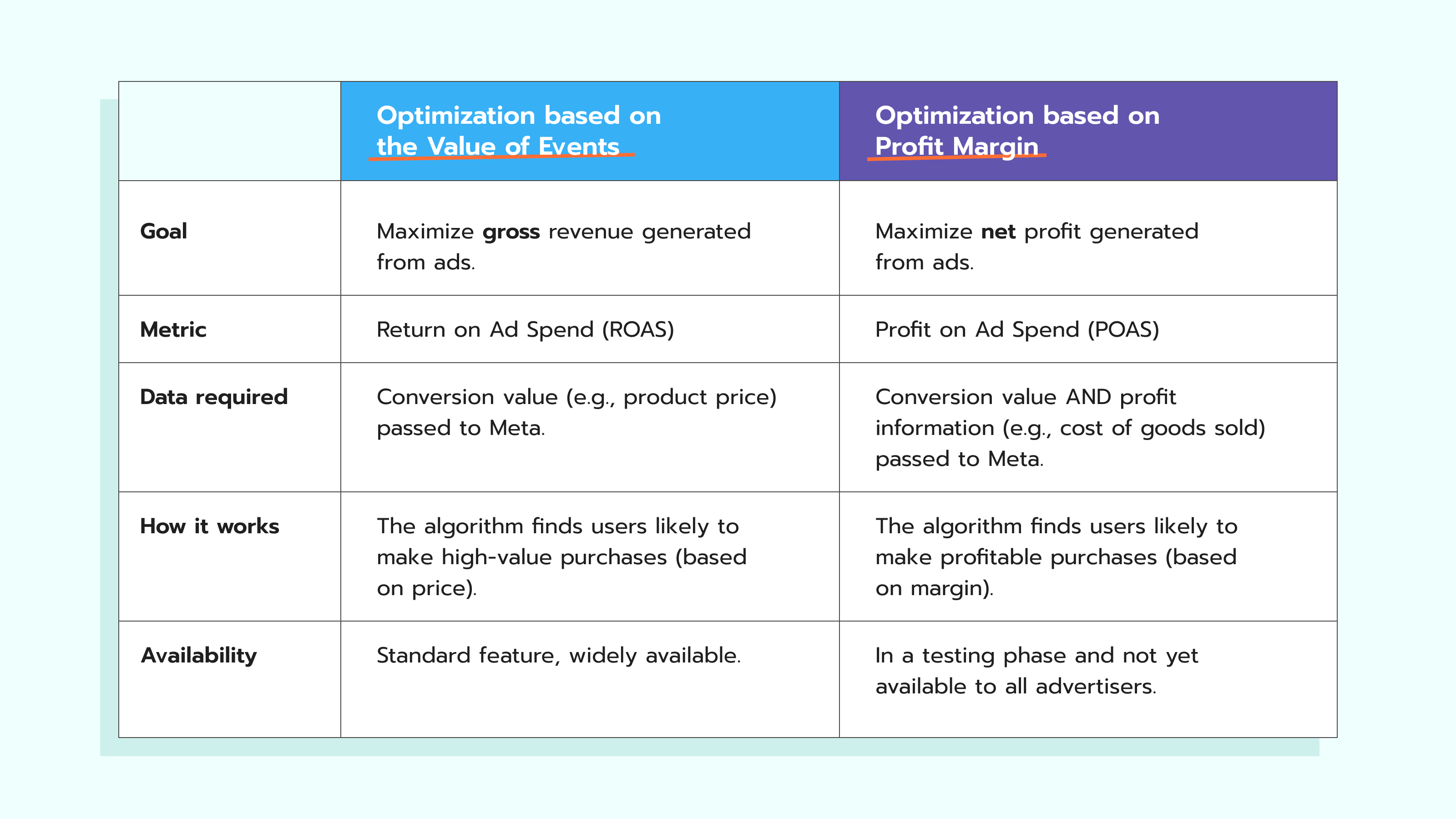
Previously, campaigns could be optimized either for the total number of conversions or for the value of events. However, these approaches are not one-size-fits-all solutions. For example, conversion value does not account for post-purchase factors such as product returns. Meta Ads algorithm prioritizes sales that bring more money; it doesn't take into account the product's profitability. It can prioritize a $100 sale over two $30 sales, even if the $30 products have a higher profit margin.
Profit margin optimizes for Profit on Ad Spend (POAS). Unlike Return on Ad Spend (ROAS), which is used for a value optimization method, POAS provides a more accurate tracking of advertising performance, as it reflects actual profit by taking into account additional costs (e.g., returns, taxes).
| Accurate Meta campaign performance tracking is crucial for effective optimization. Check our guide on Facebook tracking for available tracking options, privacy compliance tips, and advanced practices. |
The benefits of the profit margins approach
Using a profit margin-based approach for Meta Ads optimization has the following benefits:
- More accurate measurement of campaign success. Profit margin takes into account additional expenses such as taxes, delivery costs, or product returns. It gives a clearer picture of both campaign performance and overall business profitability.
- Campaign optimization for profitability, not just revenue. By sending profit data to Meta, the platform's AI can learn which products and customers are the most profitable, then it can adjust bids and targeting to bring high-value conversions.
- More effective budget allocation. Profit margins optimization contributes to a more strategic allocation of your ad budget, allowing you to effectively optimize marketing budget distribution. Instead of pushing for the highest number of sales or those with the highest value, Meta's algorithm will prioritize campaigns that generate the most profit.
Use cases
Profit-based is a good approach to campaign performance estimation for any kind of enterprise, and it is especially helpful for the following business models:
- Businesses with different profit margins. If a business sells products where the profit margin differs significantly, optimizing for gross revenue can lead to a less profitable outcome. Tracking the right eCommerce KPIs alongside profit margins gives you a complete picture of campaign performance. Meta Ads optimization will target more expensive items because they contribute more to the overall revenue. But a more expensive item may bring lower gross revenue due to higher manufacturing costs.
- Subscription-based websites. Profit margin optimization is beneficial for the long-term profitability of a new customer, or their Customer Lifetime Value (CLV). For these types of websites, customers who initially paid $10/month but subscribed for 5 years are more valuable than those who spent $100/month but subscribed just for 2 months.
- High-operating-cost business. For businesses with significant shipping or payment processing fees, a high ROAS might not mean high profitability. Optimizing for profit margin ensures that these costs are included in the advertising strategy. Meta Ads for real estate can also benefit from this approach, since commission structures and deal sizes vary widely between property types, making profit-based optimization more useful than optimizing for conversion count alone.
| You can set up accurate profit-based analytics in Google Ads and GA4 as well. For a detailed guide on the configuration process, please check our blog post on configuring Profit on Ad Spend. |
Before starting the configuration
To configure this setup, you will need the following:
- Beta access obtained via your Meta representative.
- Configured data stream from the web to the server container (using Google Analytics 4 or Data Tag/Data Client).
- Configured Meta Pixel (it can be done using Stape's Facebook Pixel tag for web GTM).
- Custom domain (optional).
For teams managing complex setups, a Google Tag Manager MCP tool can also help AI agents assist with configuration tasks.
How to configure profit optimization for Meta Ads
Please note:
The profit-based optimization is currently being tested. It is in beta and only available through your Meta representative.
Step 1. Create a sales campaign in Meta Ads Manager
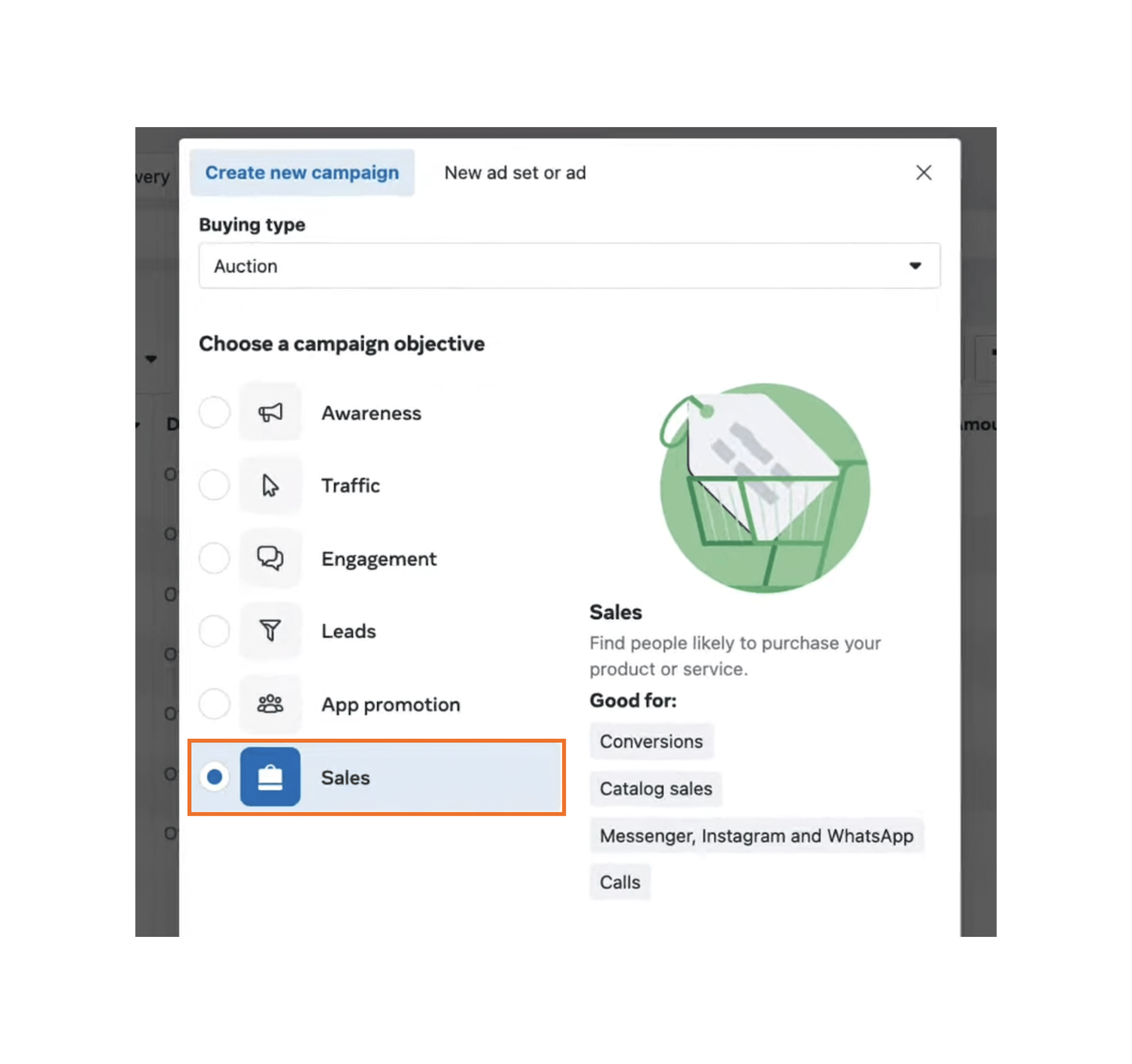
1.1 Log in to Facebook Ads Manager. In the campaigns section, click Create. As a campaign objective, select Sales.
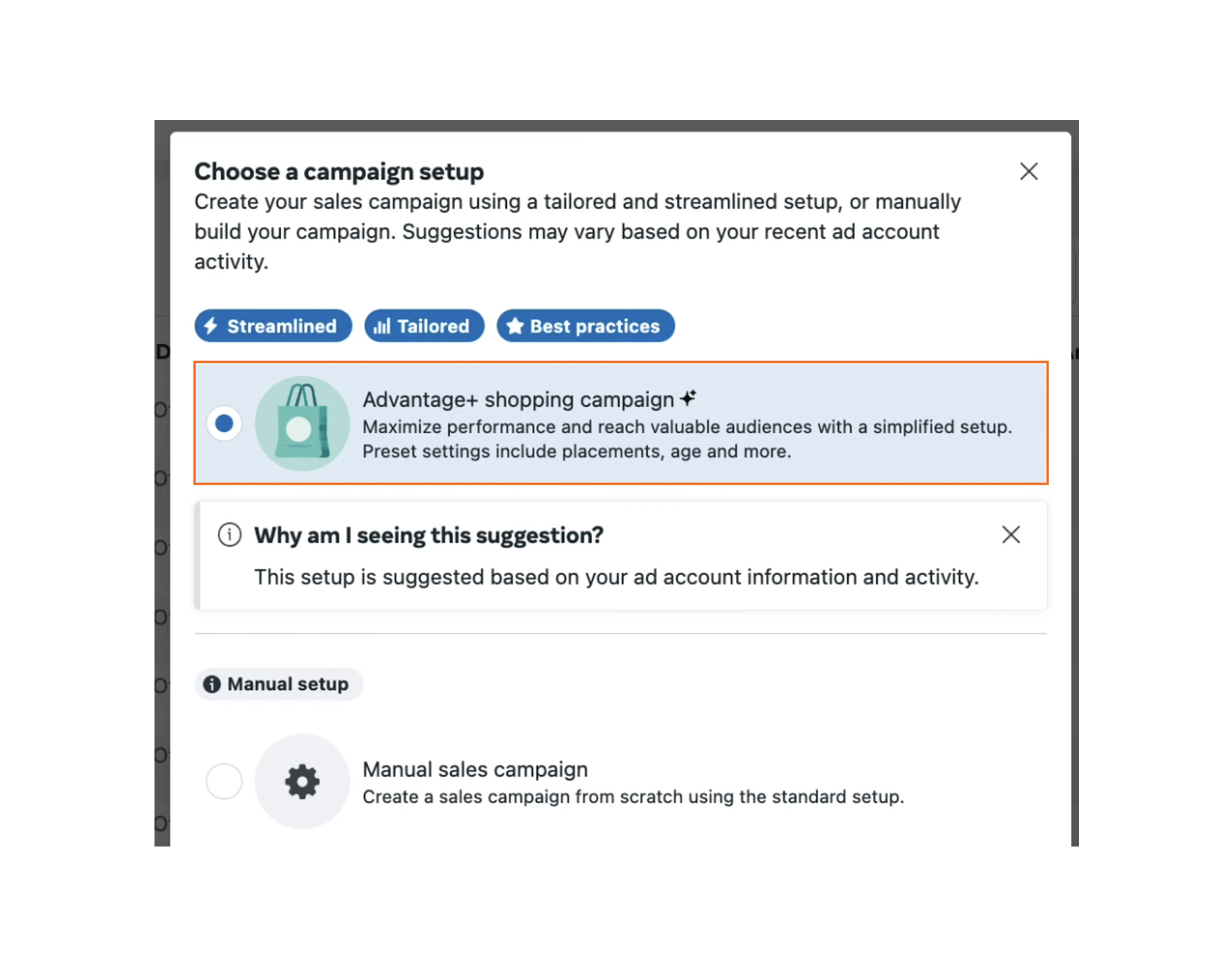
1.2 As campaign setup, select Advantage + shopping campaign. This campaign setup type is simplified and uses AI to reach the audience; it is a common configuration type that fits most of the campaigns.
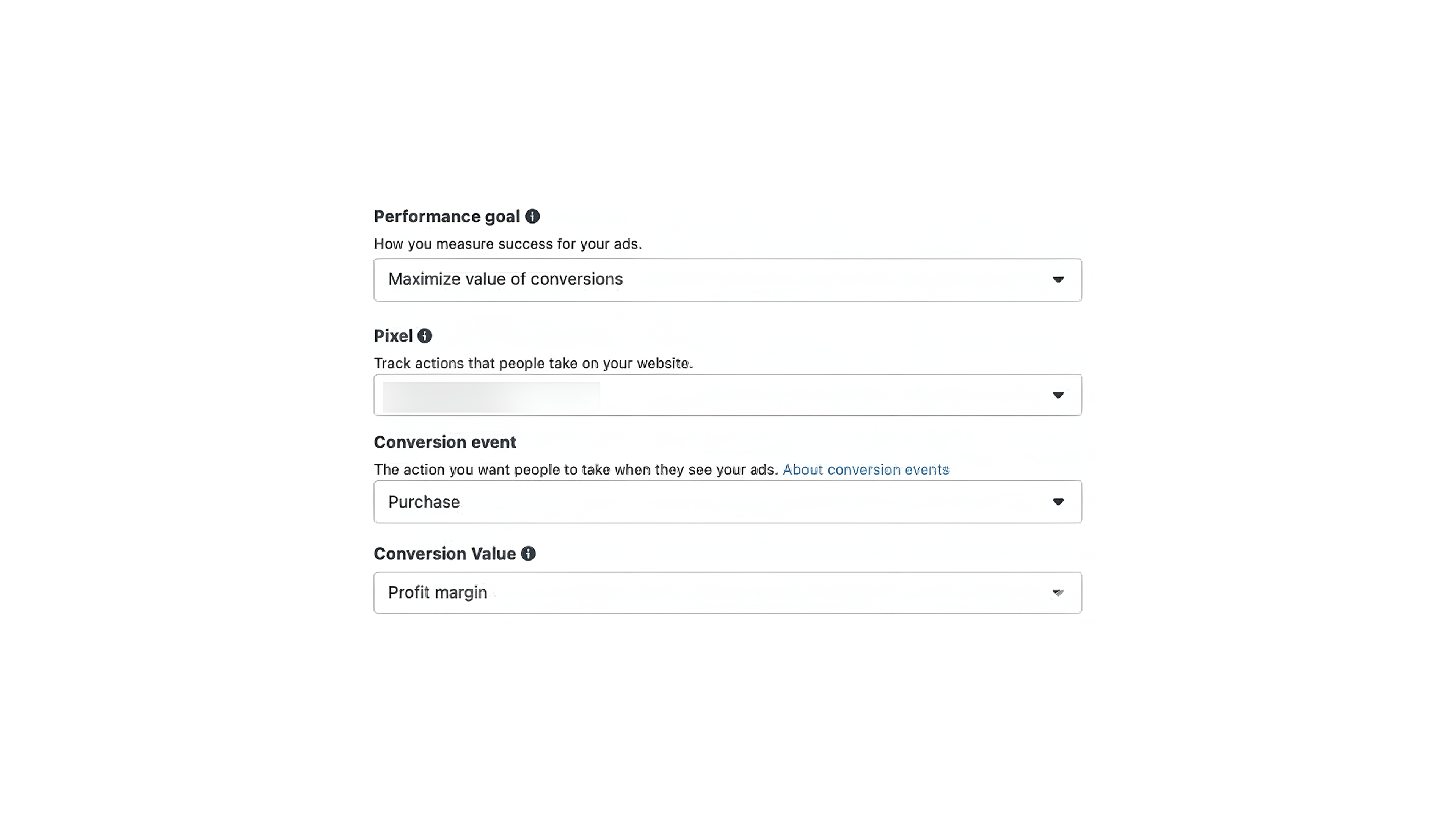
1.3 Configure the sales campaign according to your needs. The key points that you should pay attention to are:
- As a performance goal, select Maximize the value of your conversions.
- As a conversion goal, select Purchase.
- As a conversion value, select Profit margin.
Once the campaign is configured, click Publish campaign.
Step 2. Configure the Facebook Conversions API tag for the server GTM
Stape's Facebook Conversions API tag has been updated with the functionality that allows for supplementing the original event that happened in Meta with data on profitability. If you need to set up the Meta CAPI tag from scratch, please refer to our configuration guide.
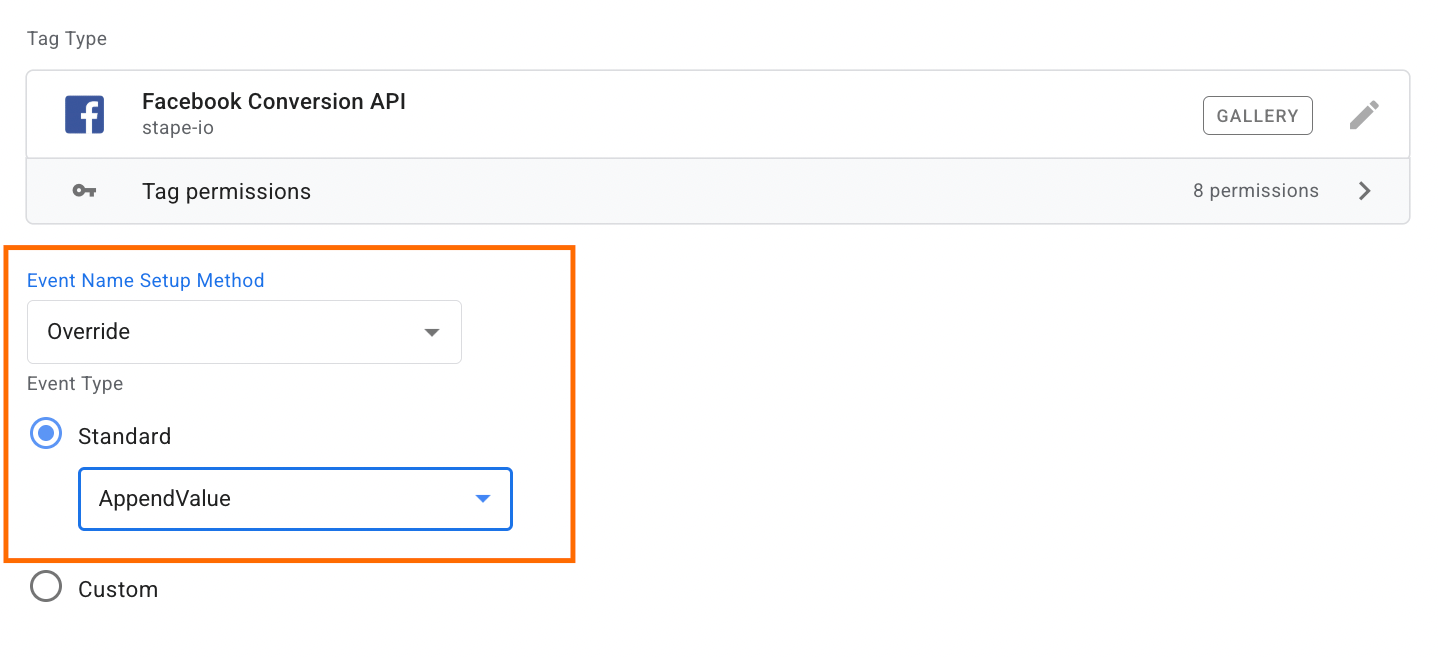
2.1 As the event name setup method, select Override and from the list of standard events select AppendValue.
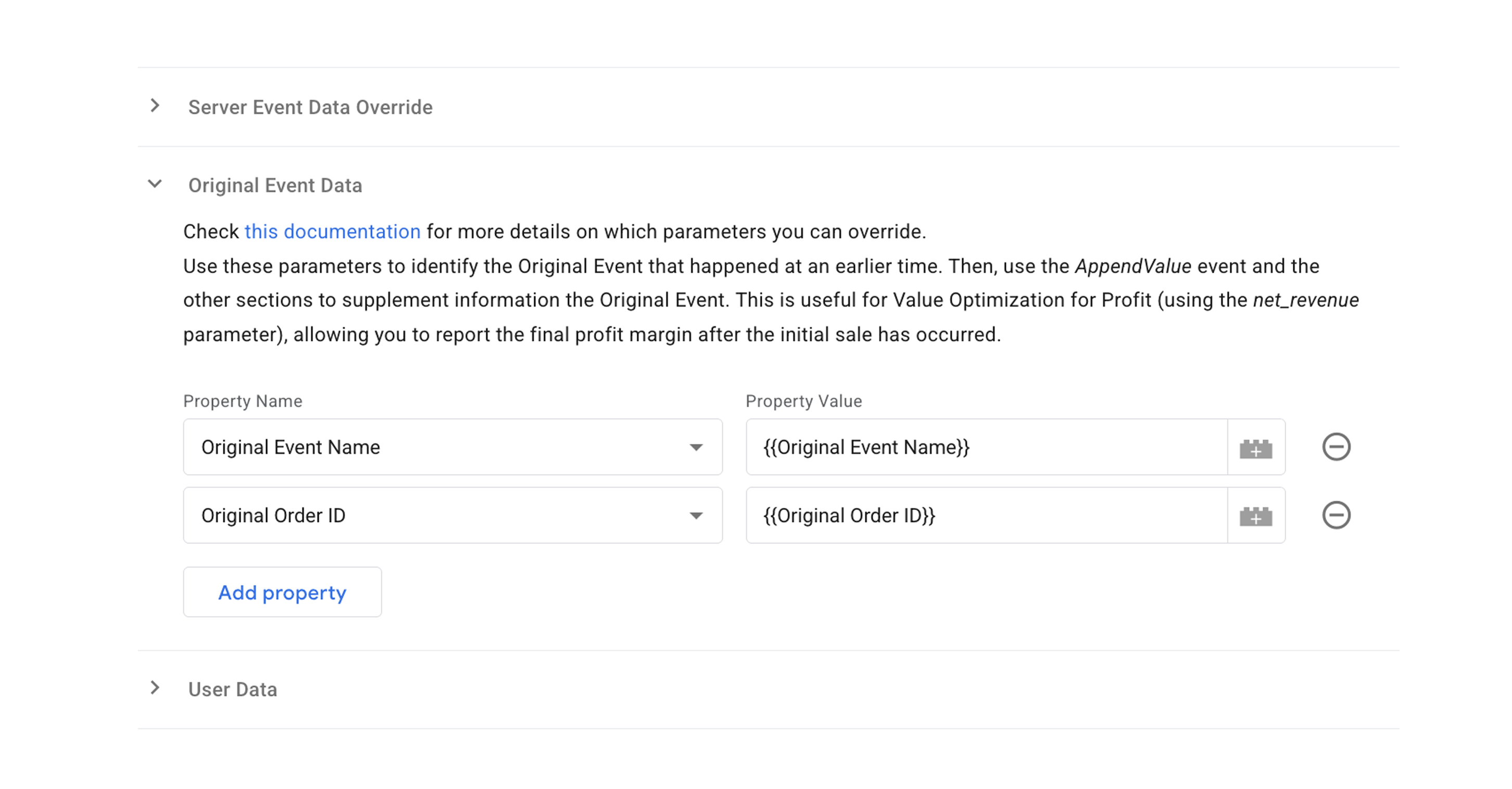
2.2 Configure the section Original Event Data Override.
Use the parameters from the droplist to locate the Original Event that occurred on Meta's side. You can find out more about the parameters you can override in Meta's documentation on original event data parameters.
Next, apply the AppendValue event along with the other sections to add more details to the Original Event.
Final note: accurate attribution is critical for profit-based optimization. If your data in Meta doesn't align with your backend or GA4, review our guide on Meta attribution discrepancy troubleshooting and fixing to ensure your optimization decisions rely on correct data. For sites with embedded content, iframe tracking setups can also affect how accurately these events are captured.
Summary
Meta's testing of profit margin optimization takes into account Profit on Ad Spend (POAS) as a more precise alternative to ROAS. Businesses with varying profit margins, subscription-based models, or high operating costs will benefit the most. The feature is still in beta. Its configuration can be done using Stape's Facebook Conversions API tag for the server GTM container.
Want to start on the server side?
Try for freeRecommended for you
Blog
Marketing spend optimization: smart ways to cut waste and improve results
Optimize your marketing spend in 2026 by using clean tracking, data-driven attribution, and smart budget rules to cut waste and increase ROAS.
Apr 10, 2026

Comments