How to set up Shopware extension
Updated Sep 28, 2026
Before you begin
If you want to use functionalities such as the Custom Loader and Cookie Keeper power-ups, you need to have an sGTM container hosted on Stape. You will also need GA4 or Data tags configured in a web GTM. If you don’t have this, follow the Get started with sGTM hosting instructions.
How to set up the extension
- 1.Log in to your Shopware account.
- 2.Open Extensions → Store. Search for Stape Conversion Tracking.
- 3.Click Add to cart and install.
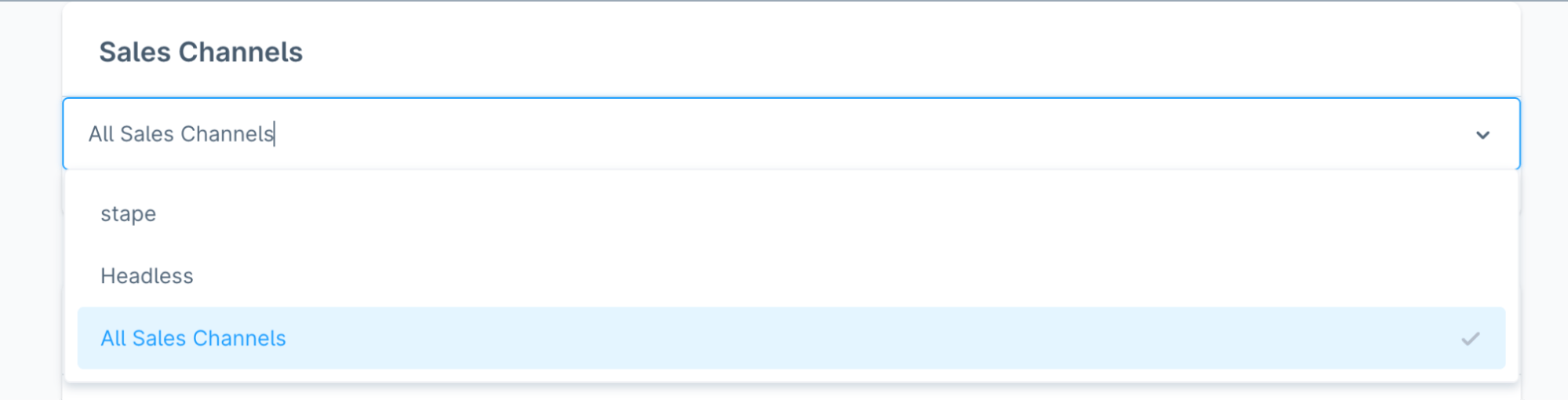
4. Open the extension and select the Sales Channels the extension should run on. By default it’s configured for All Sales Channels.
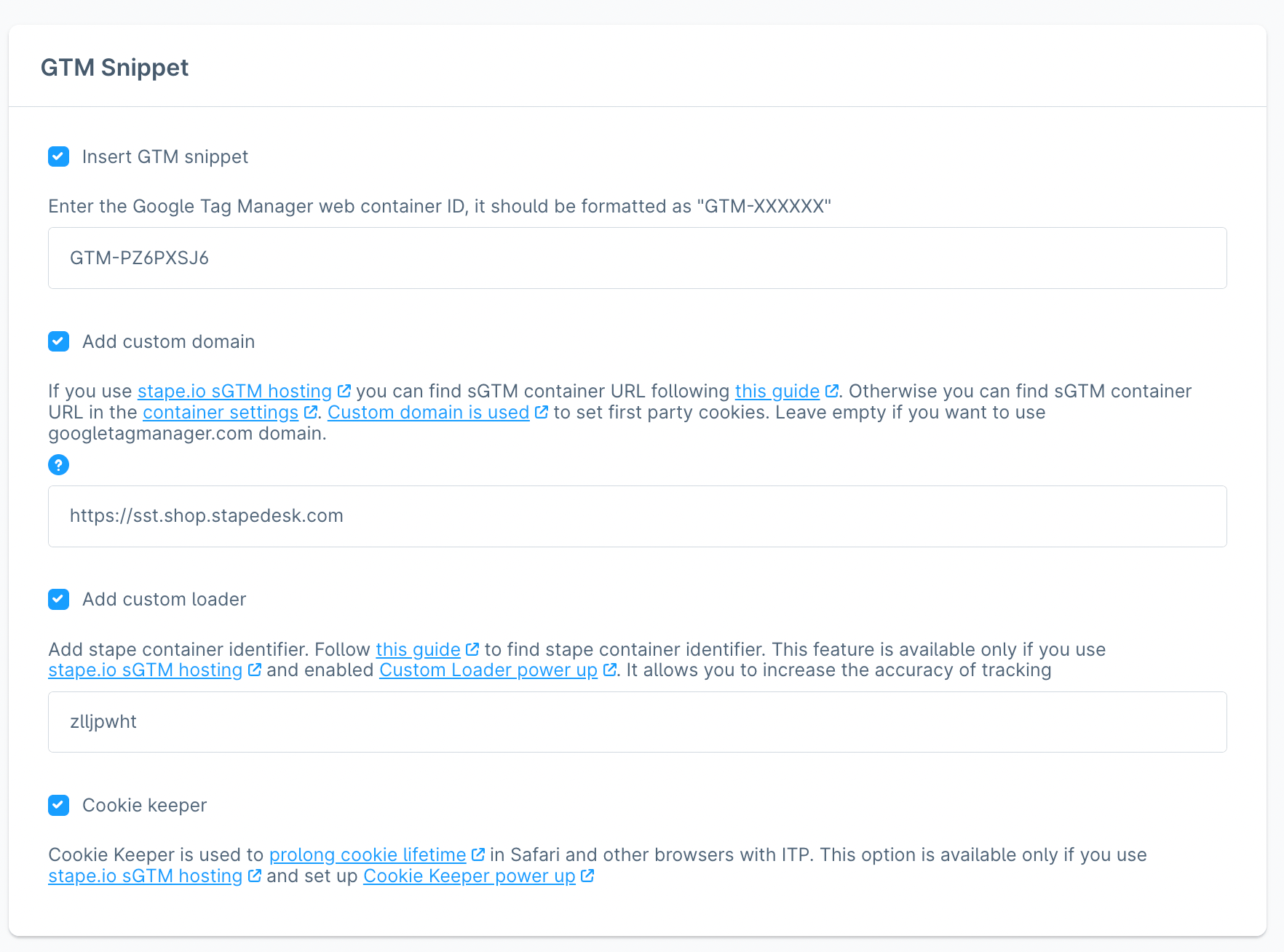
GTM Snippet
- 1.Configure the GTM Snippet tab:
- Insert GTM snippet – automatically adds the snippet with JavaScript code to every page on your website.
- Enter the Google Tag Manager web container ID – enter your web container ID.
- Add custom domain – specify the custom domain (optional). In this case requests go through your tagging subdomain, so cookies stay first-party.
- Add custom loader – specify Stape container identifier (optional). The
gtm.jsscript loads from your domain instead of Google’s, which helps the script get past ad blockers. Custom Loader needs to be turned on in your Stape account to use it. - Cookie Keeper – select whether to use the Cookie Keeper. Cookie Keeper needs to be turned on in your Stape account to use them.
2. Click Save.
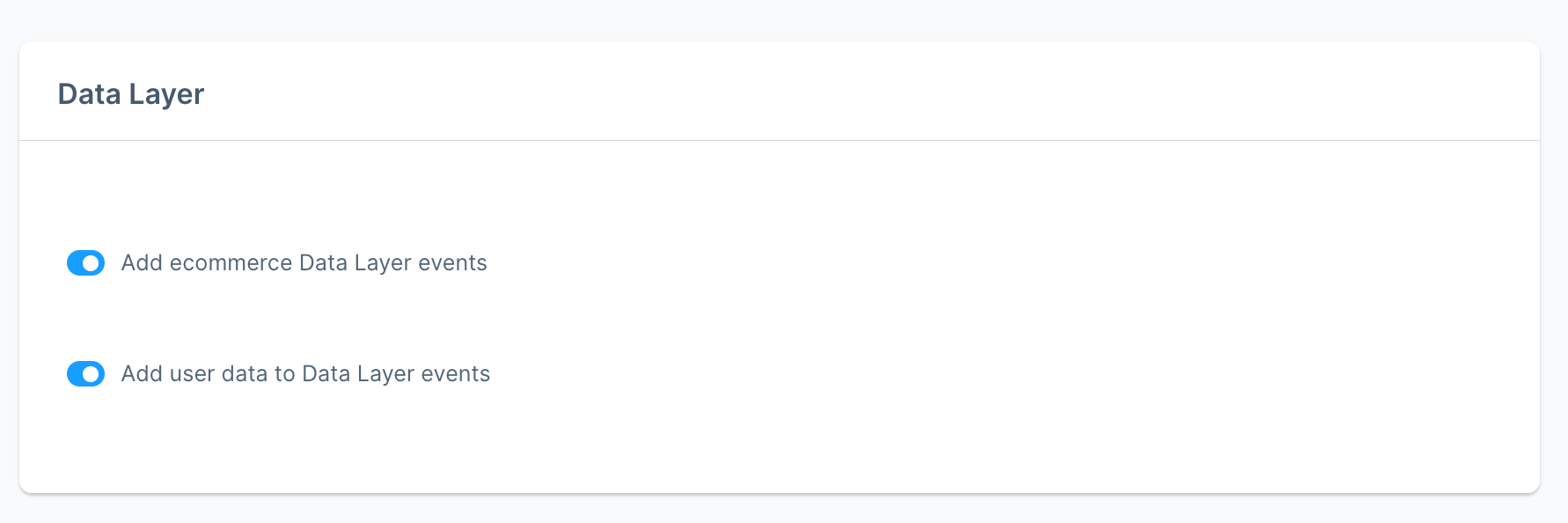
Data Layer
- 1.Configure the Data Layer tab:
- Add ecommerce Data Layer events – add standard ecommerce data layer events to your site.
- Add user data to Data Layer events – add user data layer events to your site.
2. Click Save.
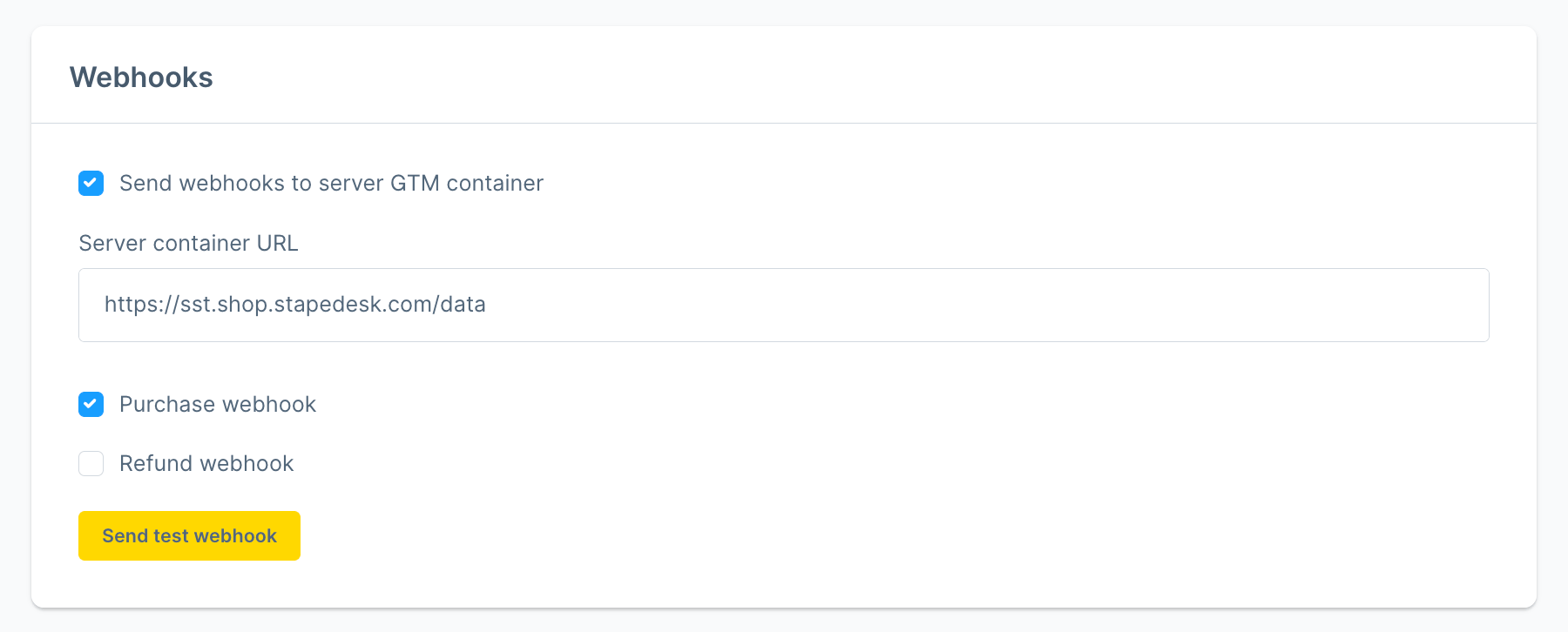
Webhooks
- 1.Configure the Webhooks tab. Webhooks are useful for events outside the website (for example, phone or offline sales).
- Enable Send webhooks to server GTM container.
- Add your GTM server container URL.
- Choose the webhooks:
- Purchase webhook – send a purchase event when a new order is created.
- Refund webhook – send a refund event when an order is refunded.
2. Click Save.
Testing
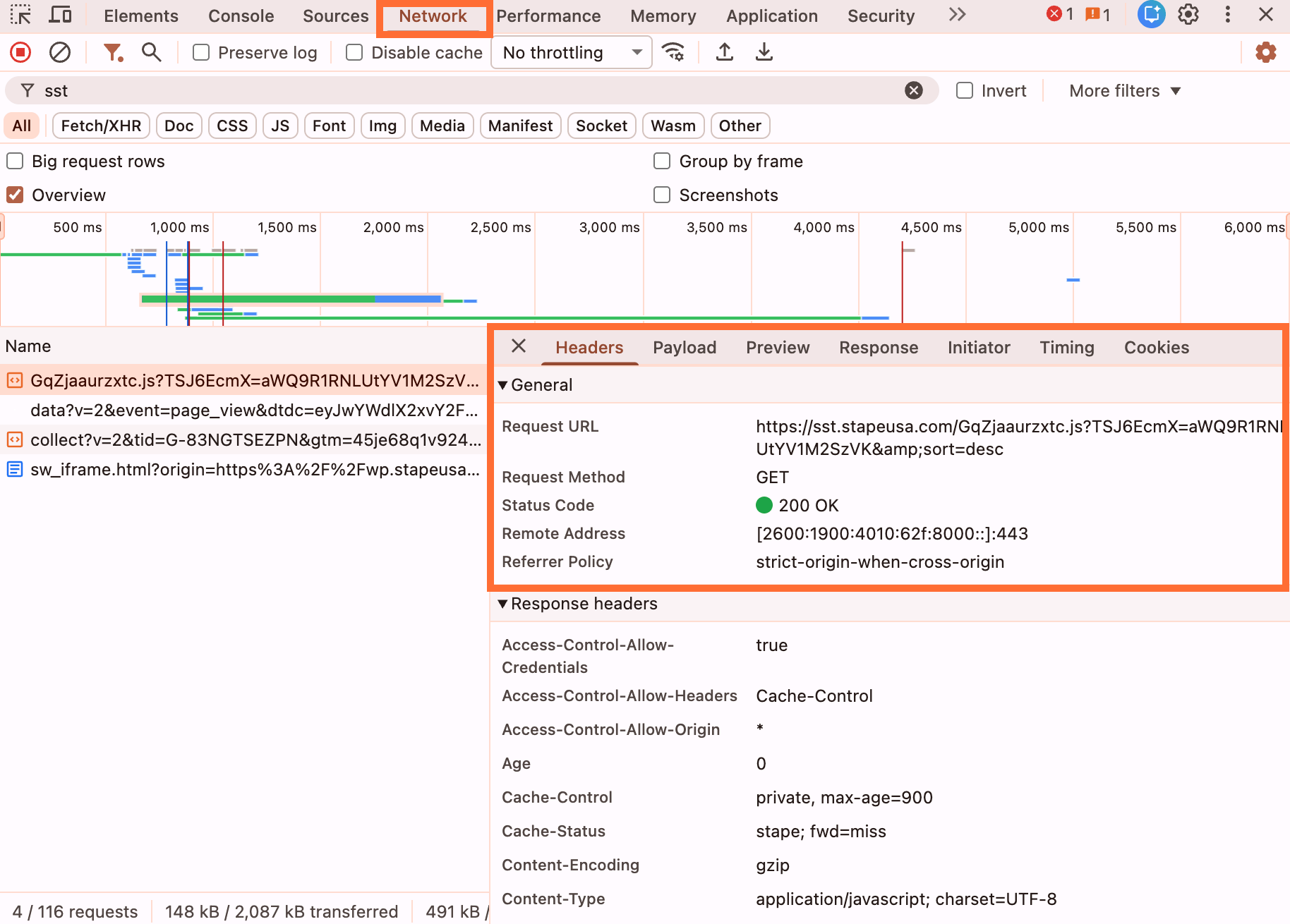
- 1.Open any site page, open the Developer Tools, and in the Network tab filter by your tagging server URL. If you didn’t set up a custom domain, search by
gtm.js. You should see the web GTM script served through that URL, with status 200.
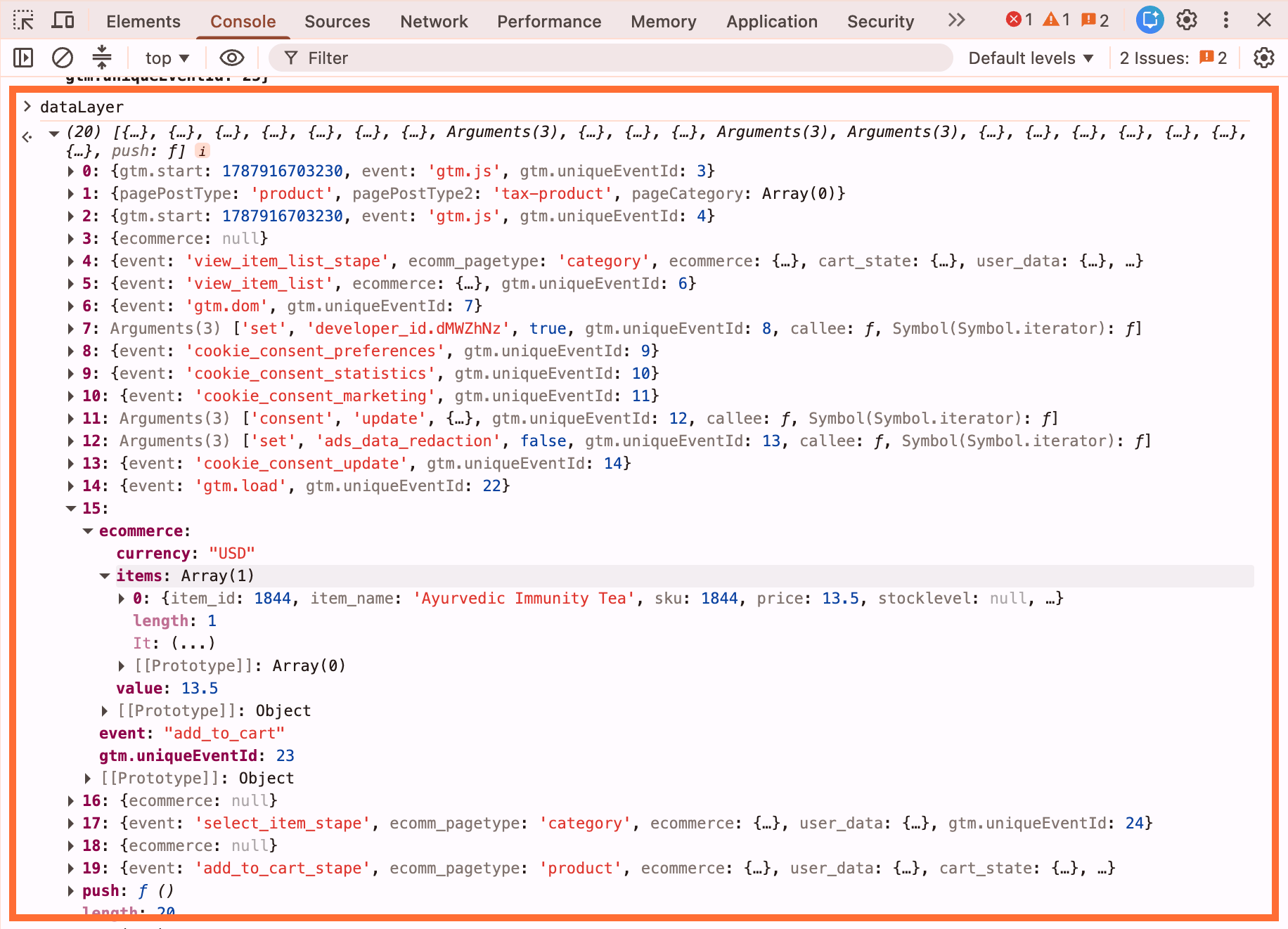
2. In the same Developer Tools, go to Console and do some actions on your site (for example, add to cart). Type in dataLayer and press Enter. Confirm that the dataLayer is being filled.
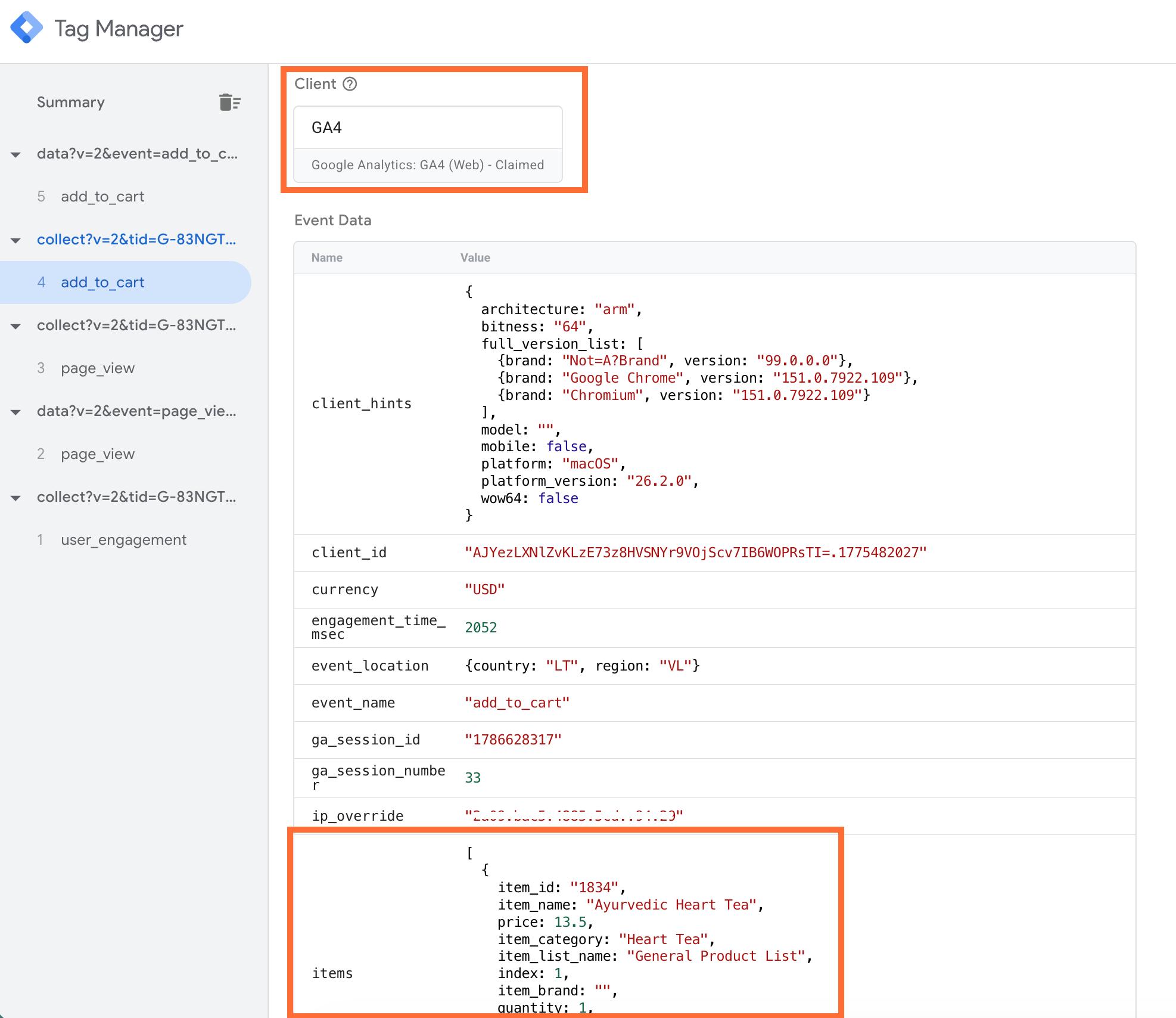
3. Test in Google Tag Manager:
3.1. Open your sGTM container → click Preview.
3.2. In a separate tab, open your web GTM container → click Preview and enter your site URL.
3.3. Perform test actions on your website (such as add to cart).
3.4. In the sGTM debug window, verify that incoming requests arrive at your sGTM and are claimed by your Client (GA4 Client or Data Client).
Was this article helpful?
🍽 Table of content:
Comments