Website Tracking Checker overview
Updated Sep 2, 2026
The Website Tracking Checker is a free Stape tool that audits your website's tracking setup and produces an actionable health report. It scans for analytics and advertising trackers, cookie configurations, and performance-impacting scripts – then assigns an overall score and generates prioritized recommendations to improve your setup.
No technical knowledge is required to use it. A scan typically completes in under two minutes.
Check the demo: https://stape.io/website-tracking-checker/demo
How it works
When you submit a URL, the checker loads your website and inspects what happens on the client side: which tracking scripts fire, what cookies are set, how data is routed (client-side vs. server-side), and how long cookies persist. It cross-references these findings against best-practice benchmarks for each platform (GA4, Meta, Google Ads, etc.) and produces a scored report broken down by category.
- Analytics - checks if platforms like GA4 are implemented using the best practices for the setup.
- Advertising - reviews how server-side tracking can improve quality for better ad attribution and ROAS.
- Cookies - audits cookie lifetimes, consent mode configurations, and technical compliance.
- SEO - detects tracking scripts that slow your site and flags those that can be moved server-side.
It also uses Semrush API traffic data to estimate potential data loss from ITP and ad blockers, and to benchmark your setup against competitor sites in your industry.
How to find the Tracking Checker
The Website Tracking Checker is available without logging in to Stape.
In the Stape website menu, click Tools → Tracking Checker. Or go directly to stape.io/website-tracking-checker.
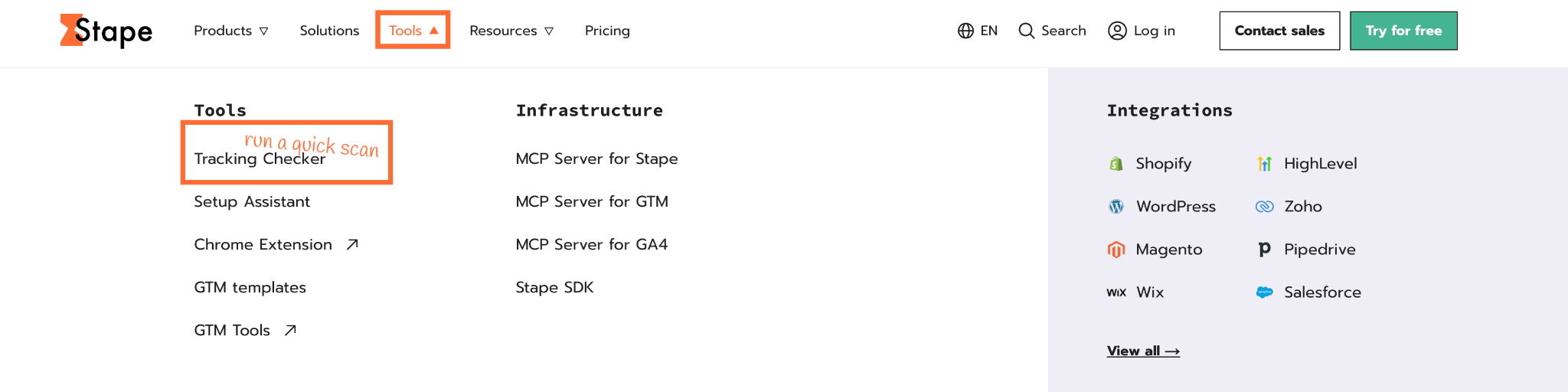
How to run a scan on the website
- 1.Enter your website’s URL.
- 2.Click Scan and wait up to two minutes for the scan to complete.
- 3.Enter your email to get the report.
Get an overview with the detected trackers, the score assigned to each tracker implementation, and personal recommendations on improving your tracking.
After making changes, re-enter the URL to re-run the scan and verify your progress.
How to run a scan inside Stape
Tracking Checker is also available within Stape for sGTM containers on paid subscription. For those, you will see a general Tracking Score for every custom domain of this container.
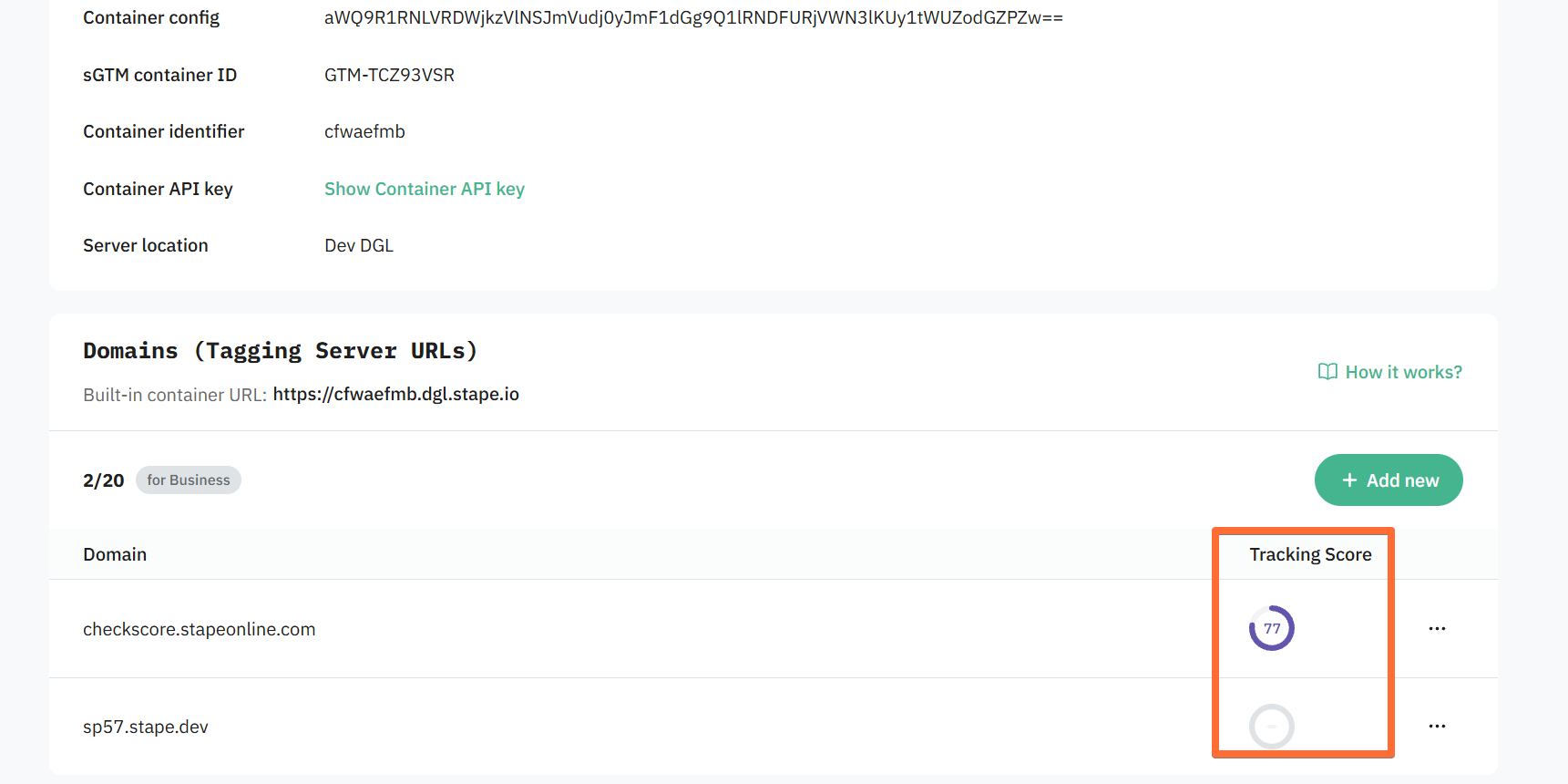
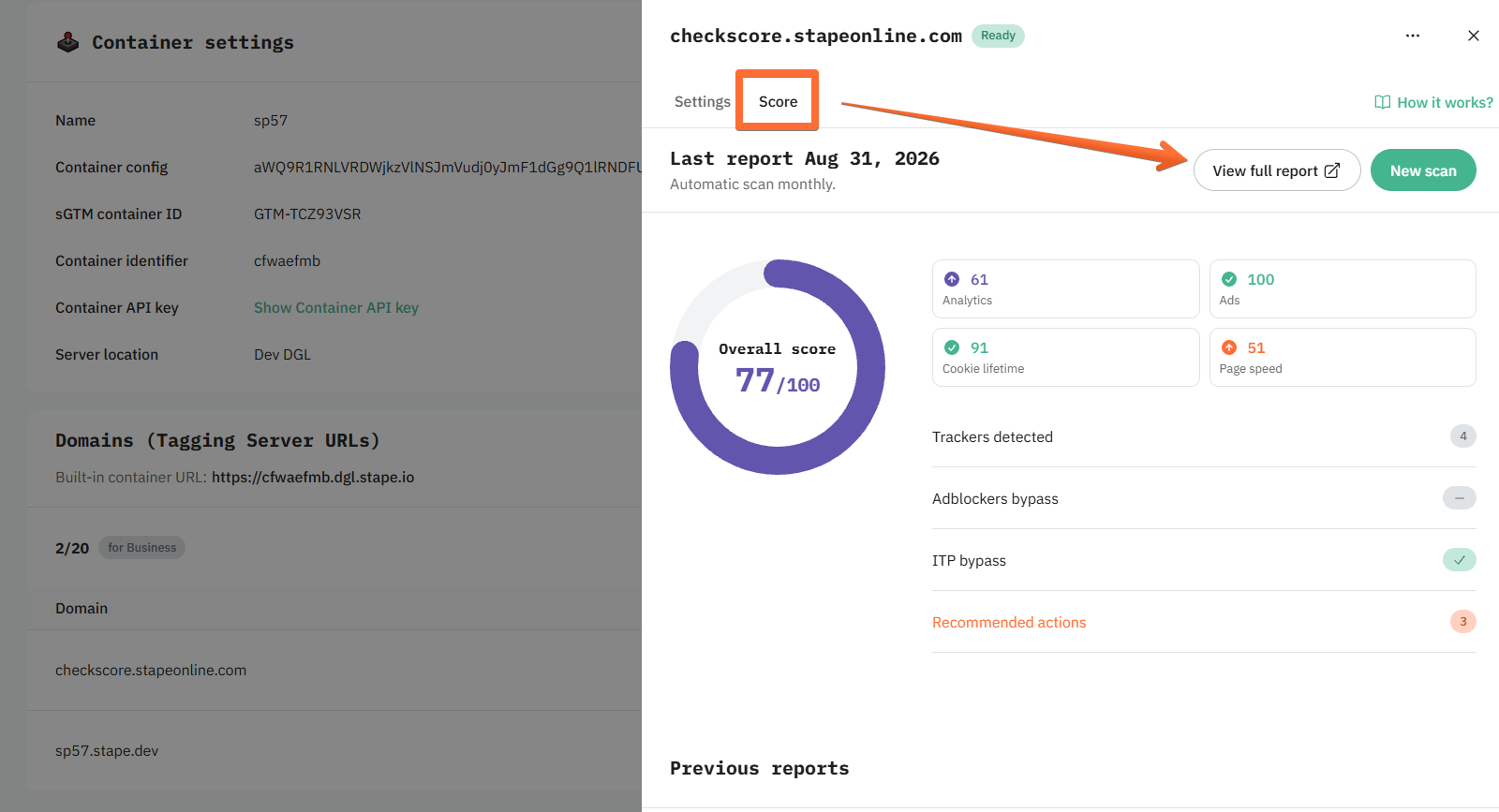
Click on your domain and open the Score tab to see the short version of the report. Be sure to click the View full report button to get the full information, or New scan to update the report.
Report
Overall score
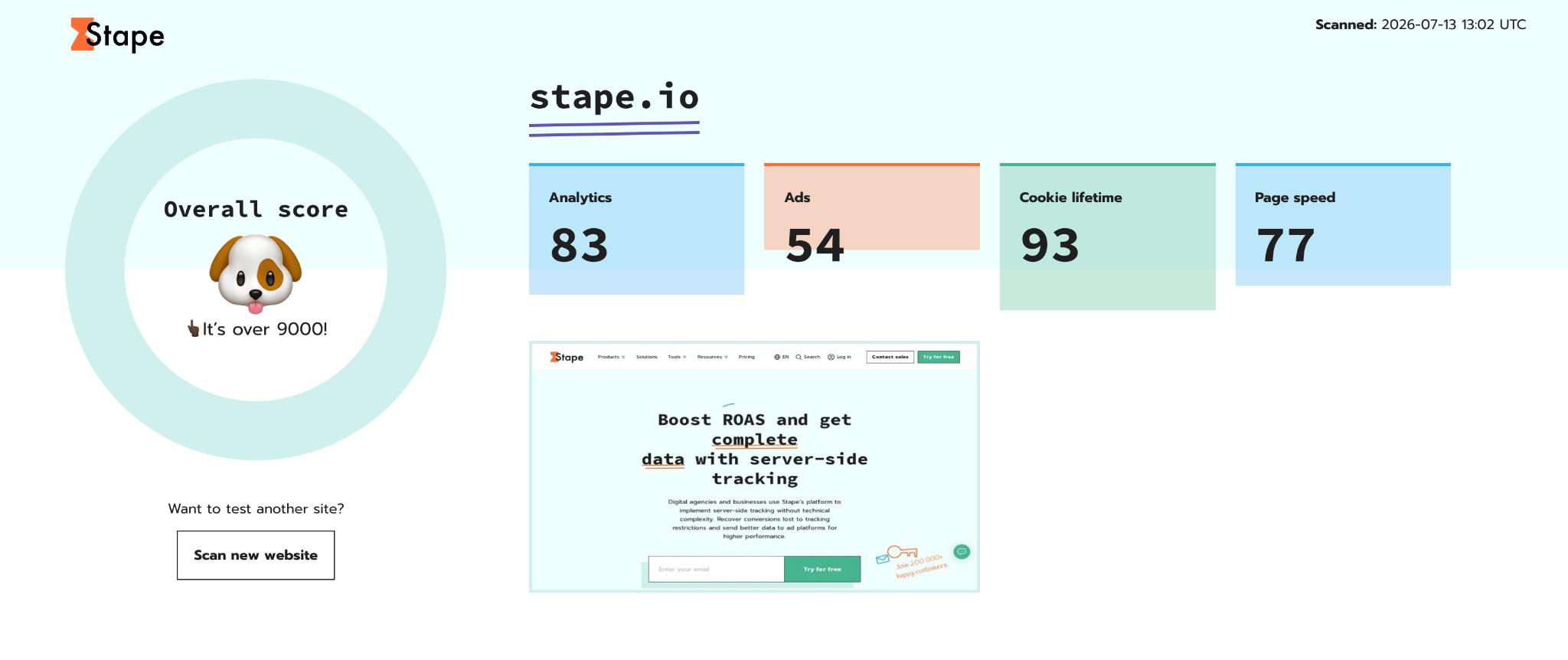
An overview of your tracking setup. It gives you a general rating of the health of your tracking configurations, including analytics, ads, cookie lifetime, and page speed. The higher the rating, the better.
Note:
Don’t confuse the ratings for specific indicators (for example, "Cookie lifetime 80" means "80 out of 100", not "80 days").
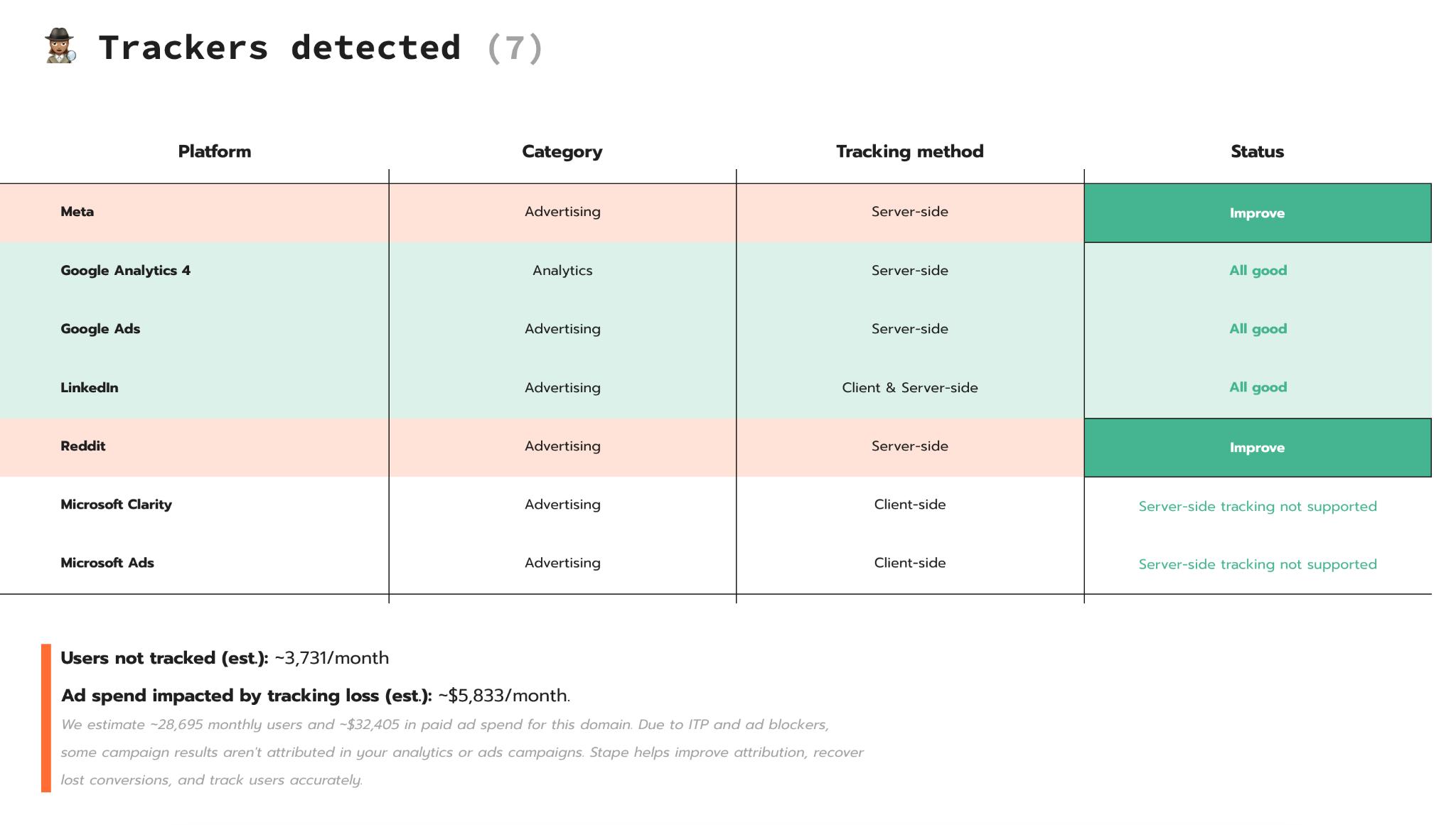
Trackers detected
A table listing every tracker found on the website. For each tracker, the report shows:
- Platform – which analytics or advertising platform the tracker sends data to.
- Category – the type of data being collected (analytics, advertising, etc.).
- Tracking method – client-side, server-side, or combined.
- Status – if improvements are available, an Improve link opens the relevant recommendations.
Below the trackers table you can see estimation of users and paid advertising losses. This feature utilizes a Semrush API integration to ingest organic and paid traffic volume data. The output is the following two metrics:
- Users not tracked (est.) – the estimated number of website visitors whose sessions and events are completely missed by standard client-side analytics because of ad-blockers, tracking protection, or strict cookie policies.
- Ad spend impacted by tracking loss (est.) – the estimated portion of your advertising budget (on platforms like Meta, Google Ads, TikTok, etc.) that is being spent inefficiently. Because tracking pixels are blocked, the ad platforms can’t accurately attribute conversions to campaigns, causing poorer optimization, lower Event Match Quality, and ultimately a higher Cost Per Acquisition.
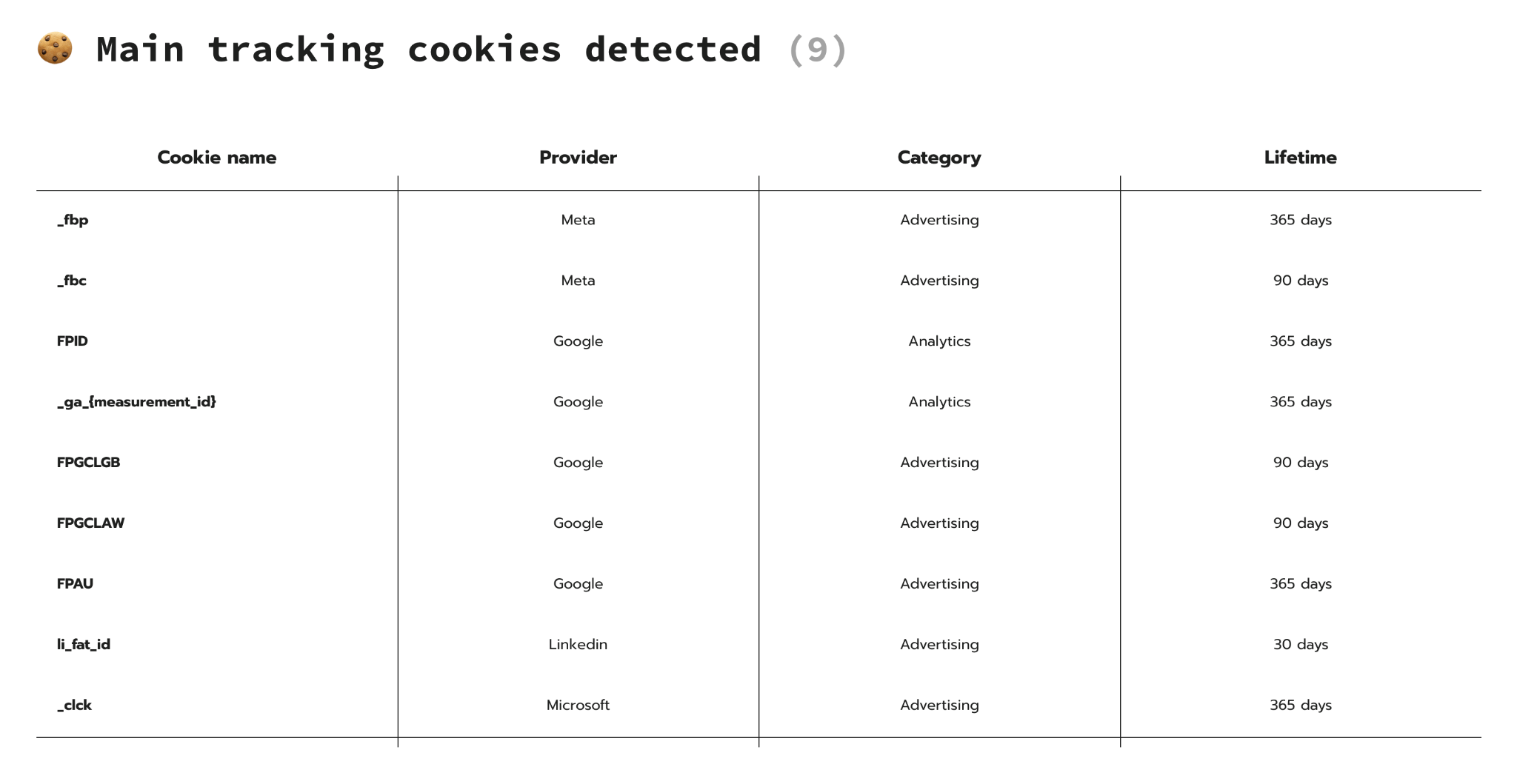
Main tracking cookies detected
The list of tracking cookies that are active on your website. It shows:
- Cookie name.
- Provider - the service that provided the cookie.
- Category - what kind of data the cookie sends.
- Lifetime - how long the cookie will exist before it expires.
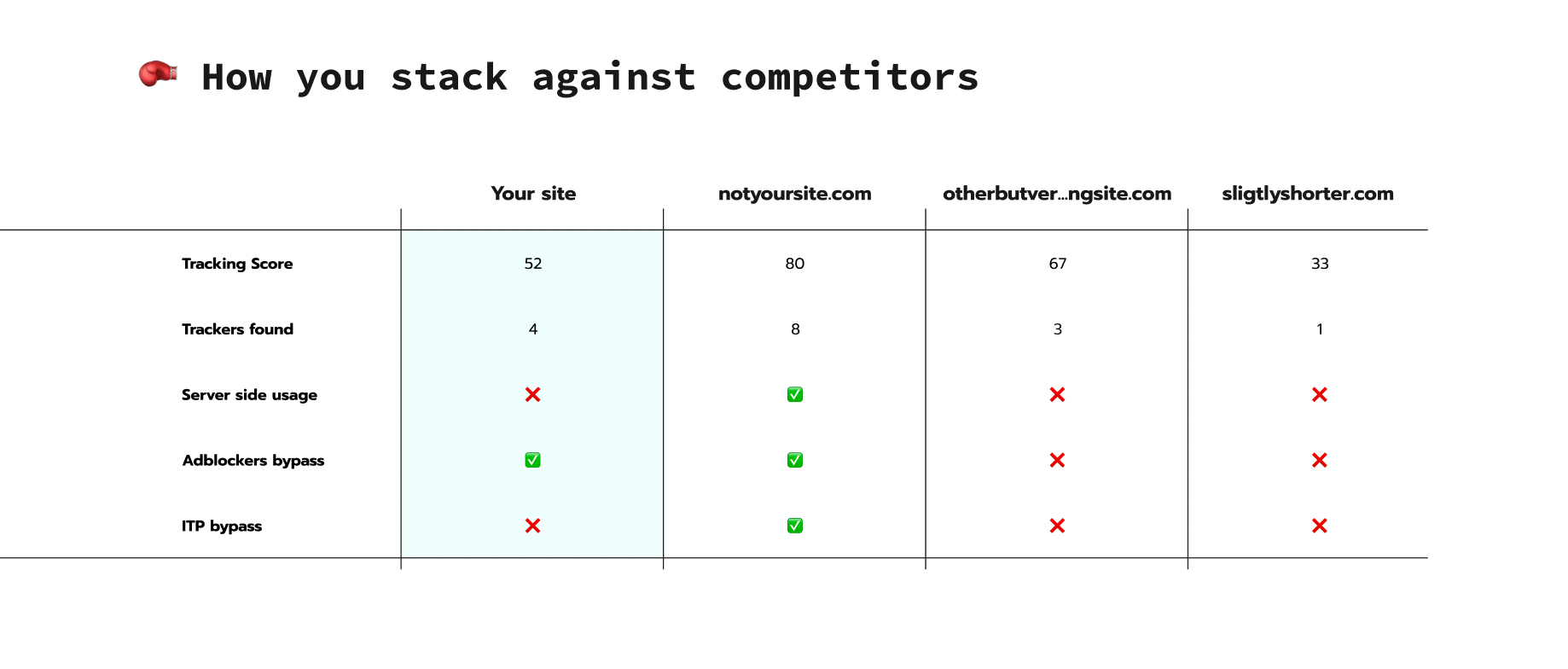
Competitor comparison
The Tracking Checker performs a comparative analysis of competitor tracking stacks. Using traffic data to identify relevant industry peers, the tool benchmarks your website against competitors based on the following parameters:
- Tracking score – overall setup efficiency rating.
- Trackers found – total unique trackers detected on the domain.
- Server-side usage – whether server-side tracking is implemented.
- Adblock bypass – whether technologies to bypass client-side ad blockers are in use.
- ITP bypass – whether mechanisms to mitigate browser tracking restrictions are deployed.
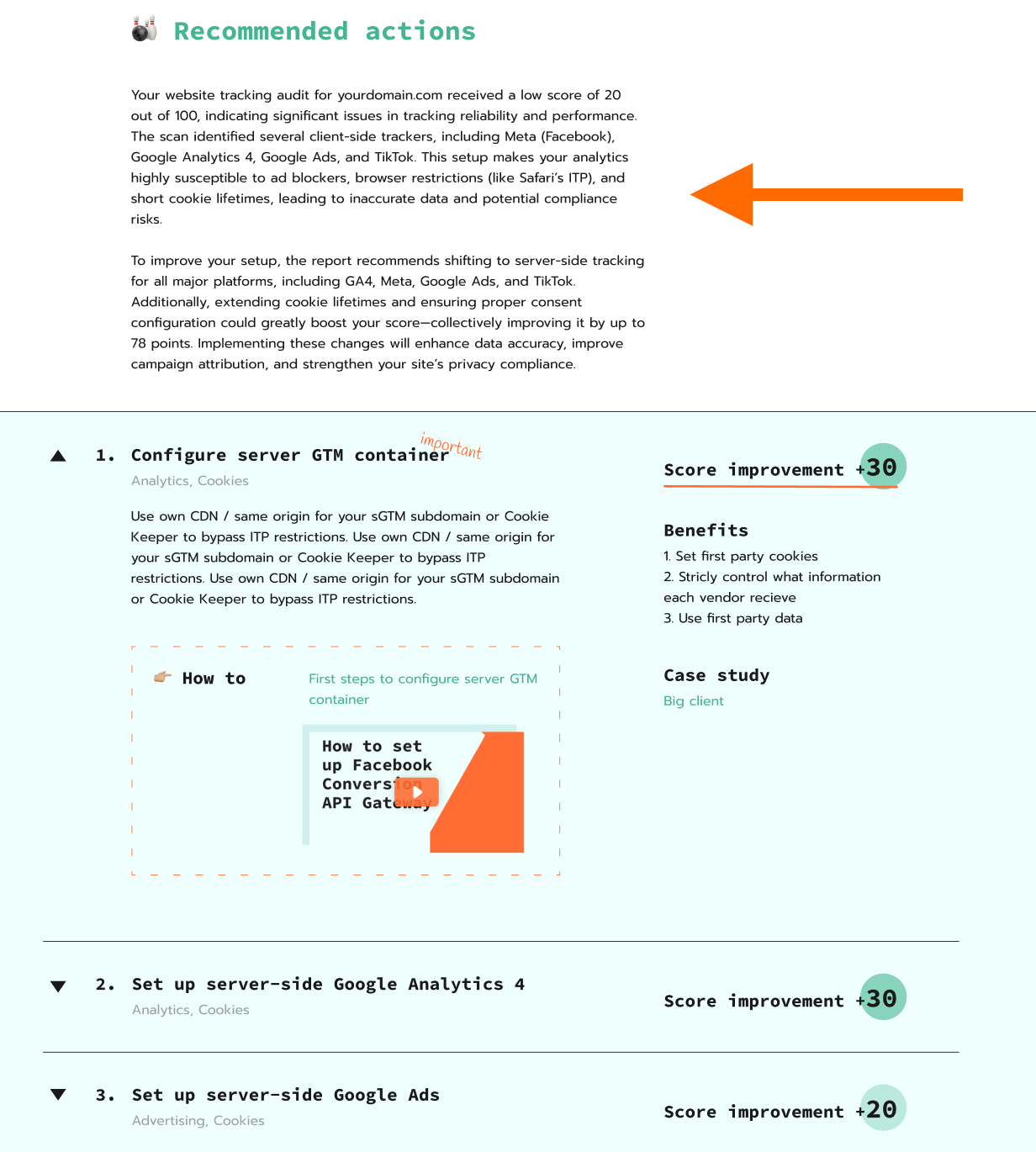
Recommended actions
A prioritized list of improvements tailored to what was found on your site. Each recommendation includes an explanation of the issue, the benefit of fixing it, and links to supporting documentation or video guides. After applying fixes, re-run the scan to confirm the changes are reflected in the score.
Use cases
1. Auditing your own setup before and after changes.
Run a scan before making changes to your tracking configuration to get a baseline score. After implementing changes (such as migrating to server-side tagging or extending cookie lifetimes) re-run the scan to confirm the improvement is measurable.
2. Onboarding a new client.
Use the checker as a first step when taking on a new client's tracking setup. Rather than manually digging through GTM containers and browser DevTools, you get a structured overview in two minutes. The report gives you enough to scope the work and explain the current state of the setup to a client in plain terms, without requiring them to understand the technical details.
3. Communicating setup health to non-technical stakeholders.
The scored report and visual breakdown are easy to share with clients or internal teams who don't have a technical background. Instead of describing problems in abstract terms, you can walk through a concrete score and a list of prioritized issues.
4. Detecting problems faster.
If a tracking setup stops behaving correctly after a site update or platform change, the checker gives you a fast way to confirm whether something has broken – without reviewing raw network traffic manually.
5. Ongoing monitoring.
Re-running the checker periodically (for example, after site deployments, CMS updates, or platform changes) helps catch regressions before they affect data quality or ad performance at scale. It can serve as a lightweight checkpoint in any release process that touches analytics or marketing tags.
6. For the specific use case on how to recover lost attribution data on first-touch ad campaign visits read How to fix GTM tags not firing with the All Pages trigger.
Was this article helpful?
🍽 Table of content:
Comments